


Wonderful Servicewomen Of The World
Posted by Michelle Moquin on May 17th, 2012

Good morning!
Unseen: Trailblazing Military Women Forced To Fight For Recognition, Equal Treatment
After a rocket-propelled grenade sent the Black Hawk helicopter tumbling out of the sky over Iraq, the medics got to work fast on the co-pilot, Capt. Duckworth. Standard operating procedure: cut away the desert-camo uniform before burnt fabric melds with burnt flesh. Get at the wounds. Stop the bleeding. Save what’s left.
When you show up at Walter Reed Medical Center in that kind of condition, you show up naked, with nothing except the hospital gown. So you’re given a “comfort kit,” a little backpack containing some toiletries and clothes. Duckworth awoke there around Thanksgiving 2004, a few weeks after the shootdown, to find a comfort kit waiting with slippers, a shaving kit and men’s jockey shorts.
She had to laugh.
“It was great. I don’t have feet, so I can’t wear the slippers, and you know, I just had my legs blown off, it’s not like I’m gonna shave my legs any time soon,” she chuckles. “I don’t have jockey, I’m not gonna wear men’s jockey shorts.”
Tammy Duckworth had just become the first female double amputee from Iraq, losing one leg above the knee and one below, but she had been a woman for a while already.
“They just had kits for men,” Duckworth says. “It never occurred to them to make kits for women.”
Duckworth is one of more than 282,000 American women who have deployed to Iraq and Afghanistan during a decade of war, according to Pentagon figures. That’s more than six times the number of women deployed in the first Gulf War and more than 35 times the number sent to Vietnam.
(An interactive timeline of U.S. women at war can be found here.)
The 207,308 women currently serving on active duty comprise some 14.5 percent of the U.S. armed forces, according to the military. While more than 2 million women have served since the Revolutionary War, some 1.9 million of them are currently living — an unprecedented generation of women at war. The number of female veterans hasdoubled since 1990 and is expected to skyrocket given further drawdowns in the Middle East.
They are helicopter pilots, linguists and flight nurses, mechanics, mental health administrators and homeland security-force directors, intelligence officers and combat correspondents, Ph.D.s and amputees, Purple Heart recipients and prisoners of war. Over seventy have become generals. Two, one in the Army and another in theAir Force, have four stars.
Duckworth, who received the Purple Heart, is one of 868 servicewomen who have been wounded in Iraq and Afghanistan. One hundred forty-four have been killed.

Yet while women are undeniably at war, the full extent of their roles and capabilities still isn’t formally recognized by the military brass. Today’s servicewomen perform many of the roles that official policy says they cannot. Often, their service and suffering remain ignored by or invisible to the Pentagon and the public.
“First thing we can do for women veterans is to raise the awareness that women are veterans,” says Maj. Gen. Irene Trowell-Harris, director of the Center for Women Veterans at the Department of Veterans Affairs and the first African American woman to reach the rank of general in the National Guard.
Of the 1.2 million positions available throughout the military, 252,179, roughly 21 percent, are closed to women, according to a Department of Defense report to Congress ordered under the defense budget bill for fiscal year 2011. At the report’s release in February, the DOD announced plans to open 14,325 more jobs — an additional 1.2 percent of that total – slated for implementation on Monday.

All graphics by Chris Spurlock. A detailed table can be found here.
“The Department of Defense is committed to removing all barriers that would prevent Service members from rising to the highest level of responsibility that their talents and capabilities warrant,” the report says. But it continues, voicing the concern of those who oppose women in combat: “There are serious practical barriers, which if not approached in a deliberate manner, could adversely impact the health of our Service members and degrade mission accomplishment. Change of this magnitude requires sufficient time and resources.”
Incremental reforms, however, don’t address the fundamental problem: a segregated system that denies women the chance to compete for the most elite positions in the military — typically the fast track to advancement through the ranks — as well as the respect that their service and sacrifice has earned.
That hasn’t stopped Duckworth, named President Barack Obama’s assistant secretary of Veterans Affairs in 2009 and now a Democratic candidate for Congress in Illinois. Yet for every Duckworth, thousands of military women remain trapped between the Pentagon’s policy and practice, between rhetoric and reality.
‘LET’S NOT TELL HIM UNTIL THE WAR’S OVER’
American women have served in the military since there has been an America to serve. During the Civil War, women on both sides disguised themselves as men to enlist. More than 400,000 women served during the World Wars, but as the United States demobilized, the military pushed women back to the homefront.

During Vietnam, Congress began to recognize that more women were needed for the U.S. military machine, repealing legal provisions that had prevented them from comprising more than 2 percent of the nation’s troops. With the end of the draft in 1973, the military turned greater attention toward recruiting women, but struggled to treat them as equals — the Pentagon’s 1988 “Risk Rule” officially excluded women even from support missions if they were deemed as likely as combat troops to take a bullet.
The first Gulf War soon proved this doctrine untenable, however, as a clear gap emerged between the risk rule and the facts on the ground.
Rhonda Cornum lived in that gap. The call to war was a big change for Cornum, a biochemistry and nutrition Ph.D. recruited by the Army in 1978 to study wound healing — when Iraq invaded Kuwait in 1990, she was primarily conducting research on helicopter pilot performance and helmet-mounted displays. For Operation Desert Storm, the Army assigned her as a flight-surgeon to an attack-helicopter battalion, directly contravening the risk rule.

You know, women aren’t supposed to be in combat, Cornum recalls a colleague telling her at their staging grounds in Saudi Arabia just before the U.S. air assault on Iraq.
“Right, I know that,” was her answer.
Do you think the colonel knows you’re a girl? he asked.
“I said, ‘Well, I’ve been living in the parking space next to him in the Dhahran Airport parking lot for the last four months,’” she says. “‘If he doesn’t know by now, let’s not tell him until the war’s over.’”
This kind of doublethink was a standard part of Cornum’s experience in the Gulf. “So when people would come around or dignitaries would come,” she says, “they’d send me off to the motor pools.”
Yet by the end of the Gulf War, Cornum had participated in roughly one-quarter of her battalion’s attack missions. “One time, it didn’t go all that well,” she deadpans.
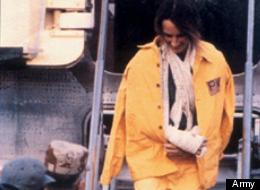
On the last day of the war in 1991, Cornum’s Black Hawk was downed by Iraqi forces during a rescue mission. She broke both her arms and a finger, tore knee ligaments and, yes, took a bullet, but nonetheless managed to crawl out of the wrecked bird. She and the two other survivors of her eight-person crew spent a week as Iraqi prisoners of war before being released.
“Nobody made any comments about, ‘Oh, she shouldn’t have been there,’” says Brig. Gen. Cornum, who was awarded the Purple Heart. “My boss got promoted again.”
A 1993 Government Accountability Office study concluded that the some 40,000 servicewomen who deployed to the Gulf performed well on all fronts. Congress quickly repealed legislation dating to the 1950s that barred women from flying in combat and serving on combat ships.
Yet while the Pentagon also lauded servicewomen’s combat performance, the official expansions of opportunities for military women did not include ground combat. Instead, Clinton Defense Secretary Les Aspin replaced the risk rule in 1994 with the “Direct Ground Combat Definition and Assignment Rule,” still the military’s official policy. Aspin’s rule gave women more options than the risk rule, but it also severely constrains them, excluding them from ground combat that could involve hostile fire and physical contact “well forward on the battlefield.”
His rule also gave the services broad discretion to further restrict women from positions that entail physically demanding tasks, special operations, direct combat, stationing or cohabitating with combat troops and a lack of privacy.
With the Sept. 11, 2001, terrorist attacks and a global “war on terror,” America’s definition of combat radically changed. The Pentagon’s policy, however, has not.
An April report by the Congressional Research Service argues that the Defense Department’s embrace of counterinsurgency strategies should prompt officials to rethink more than 14,325 positions. “Recent changes in Army doctrine have in many ways called into question the ground exclusion policy, or at least, the services’ adherence to it,” the report’s author writes.
“In 1994, we didn’t know what was coming,” says Rajiv Srinivasan, who led an Army platoon as a lieutenant in Afghanistan. Now, he says, “There is no front line, no protected circle where we can hide the women.”
ATTACHMENT VS. ASSIGNMENT
The military is about to roll back the part of Aspin’s rule that bars women from officially serving in direct ground combat units below the brigade level — allowing them to be assigned at the narrower battalion level, in specialties in which they are already serving. It will also lift the portion barring women from serving in units or positions that co-locate with direct ground combat units that are closed to them. The Army accounts for the majority of the 14,325 affected positions.
Army Maj. Gen. Gary Patton, the Defense Department’s principal director for personnel policy, says the changes are a response to servicewomen’s performance during the past decade of war. Like many throughout the chain of command, he says the new policy isn’t a change in at least one way: women are already mission-critical.

“Women have shown immense courage and have contributed greatly to our mission — we simply could not accomplish our objectives without them,” Patton, who served as a top commander in Iraq and Afghanistan, says in an email.
This line of reasoning also acknowledges that the military has for years tacitly violated the spirit of its own policy, if not the letter. While the 1994 rule bars women from being officially assigned to combat units, they can still be assigned to support positions “attached to” combat units. Thousands of the “new” positions opening to women are just formal assignment, rather than attachment, to units they already serve with, according to Pentagon spokeswoman Eileen Lainez.
Both Patton and Lainez cite as an example the position of Army tank mechanic among those newly opening to women. But Spc. Latoya Lucas served in a comparable role nine years ago.
Under Aspin’s rule, Lucas could not be assigned to an infantry battalion or brigade. She could, however, be attached as a mechanic to an infantry division, as she was to the 101st Airborne a month after the 2003 invasion of Iraq. She was part of an engineering unit tasked with resupply and infrastructure work in Mosul, an Iraqi provincial capital where fighting was heavy.
“DOD’s policy regarding women in combat was due for a revision,” she says, “particularly because so many [Iraq] and [Afghanistan] female veterans have found themselves in combat situations.”
Lucas was one of them. During a supply run, she was blown out of her Humvee when it took a direct hit from a rocket-propelled grenade. She suffered burns, shrapnel wounds, broken bones, hearing loss, paralysis and traumatic brain injury, as well as intestinal damage that required a permanent ostomy — surgery to reattach her intestine to the surface of the skin.
“I will have these ailments for the rest of my life,” Lucas writes in an email. “When I look at my scars, I cannot help but feel resilient. You have to be.”
She received her Purple Heart at her bedside during her five months at Walter Reed. A year later, she was forced to retire, even as she continued what would total two and a half years of rehab to regain her mobility. Now a public speaker, she continues to serve in a different way: Late last year, she was appointed to the VA’s advisory committee on women veterans.

At the committee’s annual meeting in late March, Lucas sits toward the end of a long table surrounded by glass and a projector screen, her sleeveless white shirt an outlier in a roomful of somber suits. Dark lines of scar tissue snake across the rippled skin of her bare arm. She asks about the transfer of medical records for combat veterans — a particular concern to women seeking treatment for injuries that, officially, they shouldn’t need.
“Did you serve in theater?” asks Michael Cardarelli, the VA’s principal deputy undersecretary for benefits and one of the only men in the room. From the head of the table, he can’t see her scars.
Like Lucas, Staff Sgt. Marti Ribeiro officially should not have been in a position to take fire, but she did. A combat correspondent who spent eight years with the Air Force, Army, Navy and Marines, she deployed to Afghanistan’s Bagram Air Base in 2006, accompanying medical convoys to remote areas without local doctors. The Army deployed such clinics in set locations rather than going door-to-door, so the locals needed significant advance warning of their arrival.
Unsurprisingly, that also made the convoys vulnerable to attack. The first night that they set up on the fringes of the northeast province of Laghman, bullets started flying. When the weapon on top of Ribeiro’s Humvee jammed, the driver got out to give suppressive fire while Ribeiro provided cover. Returning fire under fire earned her a Combat Action Badge.
By the end of her last deployment, the 5-foot-9 blonde also had a nickname, “Combat Barbie,” and was suffering from post-traumatic stress disorder, traced to trauma from combat and from a sexual assault by a fellow member of the military. Yet she faced raised eyebrows when she sought treatment: The first time she walked into a VA clinic, an older male veteran asked, “You lost, darlin’?”
(More on the issue of military sexual assault in the second installment of this series.)
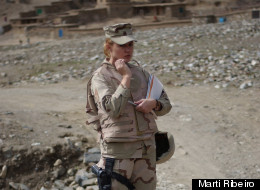
Given the military’s official policy, Ribeiro says, women veterans face dismissive treatment from the VA’s staff, too. “They’re getting denied filing for PTSD because they’re not allowed in combat,” she says. “The VA’s looking at them going, ‘You’re not allowed in combat.’”
In their February report, Defense Department officials say they have learned much over the last decade “regarding the demands of operating for extended periods at the limits of human capability.” But until they’re satisfied that women won’t hamper units operating at those limits, they say, broader changes to the 1994 rule remain off the table.
FORCE-READINESS AND THE FAST TRACK
Pentagon officials say they plan to develop gender-neutral physical standards and use the coming changes as a step toward more fundamental reconsideration of the 1994 rule. “As a former infantry battalion commander, I can tell you I wish I’d had the opportunity afforded by this change to policy,” says Patton, the personnel policy director. “Commanders want the best talent available to maximize their unit’s capabilities.”
The 14,325 positions, Patton adds, mark the beginning of a process, not the end. Defense officials often hedge, however, when it comes to eliminating gender restrictions entirely, with the caveat, “where feasible while maintaining force readiness.”
Translation: Barring outside pressure, enlisted infantry, special operations units and other elite, especially intense military positions are likely to remain denied to women for the foreseeable future, as is the advancement that comes with them.
That’s not to say women cannot rise through the ranks, as Duckworth, Trowell-Harris, Cornum and others have demonstrated. But while women account for 14.5 percent of active-duty military personnel, they make up just over 7 percent of general officers.
The Defense Department calls these figures “strong,” because far fewer women than men serve for more than 20 years, and it generally takes longer than that to reach a senior rank. (Generals, for example, typically put in 30 years.) Given that, the DOD’s February report concluded, women are not disadvantaged under the current assignment policy.
Yet the Military Leadership Diversity Commission reports that while the percentages of occupations open to women “do not appear inordinately low, exclusion from these occupations has a considerable influence on advancement.” In the Army, where only two-thirds of positions are currently available to women, four in five general officers came from the third of positions that are not.
“You’re keeping women from rising from the ranks,” Duckworth says. “You need to have some real combat under your belt. You want them to have a shot, just like you would want anyone to have a shot.”
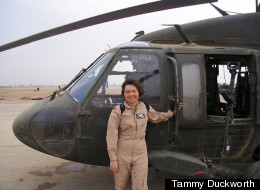
For her part, Duckworth says she stayed with the military because she “fell in love” with the physical and psychological demands. And given clear physical standards, she argues, there is no reason to keep women out of infantry or special ops. “Let’s not bar a few women who might be capable of doing it,” she says, “same way we wouldn’t bar a man from a desk job.”
“Any general who doesn’t think, any politician who doesn’t think women can handle it” is sorely mistaken, says Srinivasan, the platoon commander. As for space-sharing and privacy, he says, “We’re all adults.”
The “legacy thinking” restricting military women is a kind of “iceberg,” says Cornum, alluding to her work on the “comprehensive soldier fitness” program, which treats psychological well-being like physical well-being. “That’s one of the skills we teach,” she says, “to recognize that you have an iceberg, a deeply held belief that may be getting in the way of you seeing what’s going on around you.”
In any case, she says, future servicewomen have time on their side. “Eventually,” she says, “everybody who believed the world is flat died off.”
‘THE INVISIBLE ONES’
For veterans like Latoya Lucas or Tammy Duckworth, the costs of their service are visibly striking, undeniable. But when women’s wounds are tougher to spot, since they should not officially be facing the rigors of ground combat anyway, the military bureaucracy has often left them unseen or unaddressed. This blind spot forced Ribeiro to take her story public, and it nearly cost Jennifer Crane her life.
Crane, whose first morning of Army training was Sept. 11, 2001, arrived at Bagram, in Afghanistan, in 2003. Bagram was then just a seven-mile circle of wire around three concrete buildings and a mass of tents. Crane principally served as a paralegal for the Judge Advocate General Corps, but she still had to drive mine-pocked roads and patrol for Taliban fighters in dangerous territory.

“We were in a valley,” she says. “They could literally just stand on the edges of the cliffs and drop bombs on us.”
Within the first two weeks, she saw her first military funeral after a friend who deployed with her dropped dead of a heart attack. By the latter half of 2003, she found it difficult to eat or drink, and became consistently, critically malnourished and dehydrated. To her superiors’ credit, she says, they tried to send her home, but she managed to convince them she’d pull through — until her heart began racing and the base medics were unable to slow it back down. At that point, she was at constant risk of a heart attack herself.
Spc. Crane was forcibly evacuated from Afghanistan. Her official discharge was administrative separation: adjustment disorder. “I couldn’t ‘adjust’ to wartime service,” she says of the Army’s assessment, with a hollow laugh. “A physical condition, not a disability.”
Years later, the Defense Department began recognizing such cases as post-traumatic stress. “If I would’ve known then what I know now,” Crane says, “I might have been able to get actual retirement from the military.”
She was home in time for Christmas, but it wasn’t home anymore. Nightmares kept her from sleeping much, and even while she was awake, she’d have sudden flashbacks, feel like she was back in Afghanistan. Loud noises or lights, from sirens to fireworks and thunderstorms, would leave her hyperventilating or unconscious.
Yet because Crane’s PTSD went undiagnosed, she says, she struggled even to seek help. “I stigmatized myself because I was a woman,” she says. “Other people, they’d been through it, lost limbs, been in firefights and everything else. I really discounted my own experiences. Quite a few years self-medicating, getting rid of the nightmares, the flashbacks. Getting rid of myself.”
In 2004, Crane started using cocaine, which ended her nightmares by keeping her awake — she barely slept for a month. Her boyfriend kicked her out, and her drug use left her unwelcome at her parents’ house, too. She started self-mutilating. After attempting suicide, she was admitted into a VA program, where she was diagnosed with PTSD. By that time, however, she was far gone: After the five-week VA program ended, it was “right back down the hill,” to crack.
She spent two years homeless. “I had decided I was gonna let the drugs kills me,” she says. During that time, she started paying her dealers in sexual favors.
In a desperate moment, she says, she prayed for help, for someone to save her. “And 12 hours later,” she laughs, “I was arrested.”
After her arrest, for possession of crack cocaine, Crane was allowed to enter the drug court program in lieu of serving time. She moved back home. The program, her parents and the one friend who stuck by her saved her life, she says.

That friend, Jason, is now her husband. Their daughter, Hailey, turns 4 on May 17, a few months before Crane is to begin nursing school. She was recently awarded a fellowship to work at the VA.
The military and the VA have come a long way in treating veterans since 2003, Crane says. She remains concerned, however, for the latest waves of returning troops, especially the women. People still tell her she doesn’t “look like a vet.”
“I had high commanding officers question me once, about how I had PTSD if I was JAG Corps,” she says. “I think them allowing women to be in more ‘combat fields’ could dramatically impact the respect women get in the military.”
Military women who do not have combat decorations, high rank or visible war wounds often do not receive enough respect from their peers, Crane says. But the greater problem, she says, remains the skepticism that meets such women when they seek treatment or other help.
“It’s the invisible ones we’re struggling with,” she says. “These veterans could just fall through the crack. And we may never hear from them again.”
‘LET’S NOT WAIT TOO LONG’
Defense Secretary Leon Panetta has directed the services to update him on military gender integration in November. His department’s upcoming changes carry the caveat, however, that the Pentagon respects Congress’ intent to “remain the arbiter of the ground combat exclusion policy.”
Servicewomen have found some advocates in Congress. Duckworth hopes to join them. But as in the Pentagon and the court of public opinion, there are those on Capitol Hill who turn a blind eye to or even dismiss women’s service.
“What else has she done? Female, wounded veteran … ehhh. Now let’s move on,” Rep. Joe Walsh (R-Ill.), the freshman incumbent Duckworth is looking to unseat, said of his opponent in March. “Wearing the uniform should immediately earn everyone’s respect,” he said in a statement after the minor furor his earlier comments caused. “It should not, however, earn everyone’s vote.”
Through a spokesman, House Armed Services Chairman Buck McKeon (R-Calif.) declined to comment.
On the campaign trail, the Pentagon’s February announcement of new openings for women elicited opposition from then-presidential candidate Rick Santorum, once the third-ranking Republican senator and a favorite among social conservatives. “I do have concerns about women in front-line combat,” Santorum said. “I think that could be a very compromising situation.”
Retiring Sen. Olympia Snowe (R-Maine) counsels patience, predicting in an email that “barriers that prevent women from serving in certain roles will continue to fall in the years ahead.” But Rep. Niki Tsongas (D-Mass.), who serves on McKeon’s armed services committee, says women have waited long enough. “Let’s not wait too long to do more,” Tsongas says.
On her first trip to Afghanistan, Tsongas recounts, she had lunch with a female first lieutenant, whose brother had worked on Tsongas’ campaign. Three weeks later, the woman was killed by an improvised explosive device — a testament, Tsongas says, to the combat risks women already face.
“I think the steps they’ve made also acknowledge there’s an inevitability to this,” she says of the Pentagon, citing estimates that women will comprise as much as 25 percent of the military by 2025.
Beyond Capitol Hill, however, Cornum says her decades in the Army taught her that any policy change will come slowly, citing “don’t ask, don’t tell,” the longstanding, now-repealed ban on openly gay service members. Positions like hers started becoming available to women, she says, because the military found it increasingly difficult to enlist enough men.
Retention remains a problem for the armed forces, with multiple deployments sidelining ever-greater numbers of veterans. “We live in a country where the same 500,000 to a million people have been going to war over the past 10 years,” says Srinivasan, the Army platoon leader. “Anyone who is willing to volunteer, more power to them. Who is our nation to judge?”
Ultimately, necessity may force the end of the 1994 rule, though the military’s stated plan is to radically reduce ground combat operations in the coming years. “We cannot exclude an entire force of very capable people who can do those jobs,” says Duckworth, who became a Black Hawk pilot because aviation was the closest she could get to ground combat.
After her shootdown, Duckworth refused medical retirement. Now a lieutenant colonel, she still drills with the National Guard.
“We’re warriors,” she says. “We’re not victims.”
**********
Connie: I only read my comments this morning from yesterday, but I had to respond to your because I did not see the comment posted from Anonymous, the day before, (I thought Alycedale was the last) so I had to check it out. I agree with your sentiments. Truly beautiful. I will have to comment more later…I am so late. Got to run.
Blog me.
Lastly, greed over a great story is surfacing from my “loyal”(?) readers. With all this back and forth about who owns what, that appears on my blog, let me reiterate that all material posted on my blog becomes the sole property of my blog. If you want to reserve any proprietary rights don’t post it to my blog. I will prominently display this caveat on my blog from now on to remind those who may have forgotten this notice.
Gratefully your blog host,
michelle
Aka BABE: We all know what this means by now :)
If you love my blog and my writes, please make a donation via PayPal, credit card, or e-check, please click the “Donate” button below. (Please only donations from those readers within the United States. – International readers please see my “Donate” page)
Or if you would like to send a check via snail mail, please make checks payable to “Michelle Moquin”, and send to:
Michelle Moquin PO Box 29235 San Francisco, Ca. 94129
Thank you for your loyal support!
All content on this site are property of Michelle Moquin © copyright 2008-2012

“Though she be but little, she be fierce.” – William Shakespeare Midsummer Night’s Dream

" Politics, god, Life, News, Music, Family, Personal, Travel, Random, Photography, Religion, Aliens, Art, Entertainment, Food, Books, Thoughts, Media, Culture, Love, Sex, Poetry, Prose, Friends, Technology, Humor, Health, Writing, Events, Movies, Sports, Video, Christianity, Atheist, Blogging, History, Work, Education, Business, Fashion, Barack Obama, People, Internet, Relationships, Faith, Photos, Videos, Hillary Clinton, School, Reviews, God, TV, Philosophy, Fun, Science, Environment, Design, The Page, Rants, Pictures, Church, Blog, Nature, Marketing, Television, Democrats, Parenting, Miscellaneous, Current Events, Film, Spirituality, Obama, Musings, Home, Human Rights, Society, Comedy, Me, Random Thoughts, Research, Government, Election 2008, Baseball, Opinion, Recipes, Children, Iraq, Funny, Women, Economics, America, Misc, Commentary, John McCain, Reflections, All, Celebrities, Inspiration, Lifestyle, Theology, Linux, Kids, Games, World, India, Literature, China, Ramblings, Fitness, Money, Review, War, Articles, Economy, Journal, Quotes, NBA, Crime, Anime, Islam, 2008, Stories, Prayer, Diary, Jesus, Buddha, Muslim, Israel, Europe, Links, Marriage, Fiction, American Idol, Software, Leadership, Pop culture, Rants, Video Games, Republicans, Updates, Political, Football, Healing, Blogs, Shopping, USA, Class, Matrix, Course, Work, Web 2.0, My Life, Psychology, Gay, Happiness, Advertising, Field Hockey, Hip-hop, sex, fucking, ass, Soccer, sox"
May 17th, 2012 at 8:13 am
Connie, I had to go back to find the poem by Anonymous you referred to. I don’t know why he chose to post it a day behind but it was worth the search.
Why do all the great lovers seem to have found the unrequited love when I am searching for someone just like them?
Minerva
May 17th, 2012 at 8:29 am
What to Do When You’re Tempted to Stray
A smoldering gaze from a stranger across a crowded room…the open admiration of an attractive male coworker who showers you with compliments…a chance encounter with an old boyfriend who confides that he still misses you.
You’re probably familiar with the delicious frisson of sensual excitement that can accompany such events. If you’re single, you may well decide to take things further.
But what if you are already in a committed relationship? Before you let temptation get the better of you, take steps to affair-proof your partnership…
Remind yourself not to misinterpret an attraction to someone else as a sign that your current relationship must be seriously flawed.
It is normal to be drawn to almost any person who is charming, handsome, intelligent, accomplished or funny…and it also is normal to feel flattered by this attention and to fantasize about being with that person.
Such thoughts and feelings are harmless enough—in fact, research suggests that they can even strengthen your bond with your current partner.
Reason:
Studies show that women’s brains have a built-in faithfulness feature that, when triggered by a flirtatious fantasy, touches off subconscious counterbalancing thoughts of loyalty and commitment.
Set safe limits.
Flirtations can be innocent as long as you merely enjoy the electricity without letting things get physical.
To keep from crossing that line, make a list of the possible consequences of a fling (such as feeling guilty or empty afterward, contracting an STD, getting caught, enduring a painful breakup)…
acknowledge how hurt your partner would be if you cheated…remind yourself how much you value your moral integrity.
If passions get intense, reaffirm your limits by saying, “I am attracted to you, but this is going no farther—I am committed to being faithful to my partner.”
Inject some “new love” excitement into your existing relationship. What’s missing from your life right now that has you toying with thoughts of cheating?
Quite likely, it’s the excitement factor. Over time, it is common for couples to become bored, take each other for granted and think they know everything about one another.
The new object of your desire is appealing precisely because he is a mystery (even if he is an old flame) and his attention makes you feel desirable.
To experience those same heady emotions with your current partner, get him to agree to go on a date and pretend that it’s the first time you met. (This may feel forced or silly at first, but stick with it.)
Dress up…hold hands…go somewhere special that you’ve never been before…treat each other in a courteous, caring way.
During your date, ask your partner the deep questions you would want to ask a new man to whom you were strongly attracted (for example, What do you treasure most in your life?
If you could have one wish, what would it be?). People change, so no matter how well you think you know your partner, you may find his answers surprising and exciting.
Then, when you get home, fall into each other’s arms…tear off each other’s clothes…and let your recent fantasies inspire some truly creative lovemaking.
If the urge to stray persists, seek professional counseling. You may need professional help to confront unresolved conflicts within yourself, such as an exaggerated need for attention or a fear of commitment…
or to resolve real problems in your relationship, such as sexual incompatibility, built-up resentment or retaliation for a partner’s indiscretions.
For a referral, visit the Web site of the American Association for Marriage and Family Therapy (www.aamft.org).
Talking things through with a trained counselor can help you figure out why you are putting your relationship at risk…whether it really is time to move on…or whether what you have with your current partner is worth working on to make it stronger, deeper and more satisfying.
Source: Judy Kuriansky, PhD, is a clinical psychologist and sex therapist on the adjunct faculty of Teachers College, Columbia University in New York City.
She is the author of five books, including The Complete Idiot’s Guide to a Healthy Relationship (Alpha), and is a columnist and advisory board member for HealthyWoman from Bottom Line. http://www.DrJudy.co
May 17th, 2012 at 8:32 am
Michelle, I loved your suggestion to check out “Whisper” also. I am not an engineer but I enjoy your conversation very much also.
Thanks for your comment to me.
Ida
May 17th, 2012 at 10:49 am
let’s face it, guys are smarter than women. Ladies, please de-bunch your panties and open your ears. Men build all the bridges, all the dams, go to the moon, et cetera. It’s a fact. I don’t want to argue about it.
If you don’t believe me, go down to the patent office, where, by the way, Einstein and his penis used to work, and see all the great innovations women didn’t come up with.
But commercials depict men as simpleminded buffoons. The wife’s out of town and Dad’s left alone to prepare breakfast for the twins. Smash cut to the guy dumping the waffle batter into the toaster.
Or how about the famous Carl’s Jr. campaign about how guys would starve without them, featuring a dunce in his mid-thirties attempting to make guacamole by putting a whole avocado in a blender?
(You ladies are lucky I’m too lazy to look up what percentage of Michelin-rated chefs are men.) Or the same guy wants to lounge on the sofa all day watching arena football, but his lady convinces him to go with her to Home Depot to remodel the basement.
We would complain about this unfair depiction, but we are too busy running Home Depot and the plant that makes the television the guy on the couch in the commercial is watching.
And building, designing, and operating the camera and satellites that make it possible for you to see the commercial that makes us look like chimpanzees.
May 17th, 2012 at 5:43 pm
To all you women haters, racists, bigotists, I strongly suggest you read the book “How to Make Friends and Influence People”….it just might make you and reading your entries more palatable….just saying…just venting….
W/
May 17th, 2012 at 7:10 pm
FB, you sound like the typical white boy bragging about what the white man has accomplished in the USA.
Think about it, for 250 plus years you have been America’s Affirmative Action Beneficiaries. You were all the doctors, lawyers, judge and juries, and everything else in this country for almost 200 of them.
No other sex or OTW had access to the knowledge, schools, courts, etc. If women or OTWs had started with all that, we wouldn’t just have made a few trips to the moon, we would be colonizing space by now.
You actually held those positions for more than 100 straight of those years. With a head start like that and so little accomplished, what are you bragging about?
Look around you and imagine what this earth would be like if a few good women had been at the helm. The earth certainly wouldn’t be so polluted, Nor would on the verge of global disaster in every other category.
You greedy bastards have been horrible stewards of this third rock from the Sun. Most of you inventions arose out of the desire to kill or conquer the weaker countries.
If rape, pillage, genocide, enslavement, extinction of entire species animal and vegetation are great accomplishments, brag all you want.
Considering that with the little inroads you have given white women and OTWs, the record shows than not only have they excelled they have left your sorry asses in the dust.
What have you done in response? You have banded together to loot the country with your financial schemes and your bought and paid for Senate, House and STARK.
I wouldn’t brag about what the white boy has done if I were you. Most of the inventions you would claim were stolen from white women and or OTWs because only white men could patent or present themselves in a court of law.
It is the height of ignorance to brag without being aware that others know that your bullshit is just that.
The obvious example is President Obama. He has done in one term what 43 other white men couldn’t so many times.
When you consider that he gave us health care despite 99% of the Senate being white and the House more than 80%.
Think what could be accomplished in this country if we got rid of some of those white boys you are bragging about and gave Obama a second term to work with that new group.
Now for your bragging about men being smarter than women. Consider the source.
Alycedale,
May 17th, 2012 at 7:27 pm
And speaking of white boys.
Mitt Romney wants to create a lot of “jobs”: Minimum wage. Part-time, Contract. With no health benefits. And/or in Mumbai.
Mitt Romeny really only wants to create PROFITS for himself and other wealthy people, just like he did at Bain Capital. Cheap, degrading, non-sustaining “jobs” are only a part of that—and only as long as they’re necessary.
May 17th, 2012 at 7:28 pm
And for his next behind the scenes, under the table deal……..obama will officially start taking campaign donations from mexican drug lords…….as long as the money is green, obama does not care where it comes from………………
May 17th, 2012 at 7:30 pm
Thursday means press day at Human Events, and our issue this week is a special focus on national security & defense issues, with exclusive pieces from many foreign policy thought leaders such as Ambassador John Bolton, Dr. Sebastian Gorka, James Carafano and much more. Also – Hope Hodge’s cover story takes an inside look at the Romney foreign policy team and his foreign policy doctrine. Make sure to pick up a copy on Monday, or subscribe today.
What we’ve got on line today: John Hayward’s latest piece on the green energy failure, First Solar. “First Solar chairman of the board Michael Ahearn, who was once CEO of that fabled ‘green energy’ disaster, hopped on his corporate jet and flew to Washington this week, for a nostalgic look back at President Obama’s “investments” held by the House Oversight and Government Reform Committee.” Looks like he dumped his stock after the loan came through and right before the company tanked. John’s piece is below.
David’s column is on the Facebook founder, the one not named Mark Zuckerberg, who is renouncing his U.S. citizenship to move back to wherever he came from to save millions upon millions of dollars when the company goes public. As David notes, “Saverin was blessed with an upscale Miami upbringing, a top-notch Harvard education, and has thrived in an entrepreneurial environment created by Americans, becoming insanely rich during the Internet boom.” David asks: What does Saverin owe us? Read below.
Also, John Hayward has an update on the ever-hilarious Elizabeth Warren fiasco up in Massachusetts. That, and much more below.
Have a great Thursday.
-Adam
May 17th, 2012 at 7:35 pm
FB, you want to know how a woman thinks.
=========
Homeland Battlefield Act Portion Found Unconstitutional By New York Judge
http://www.huffingtonpost.com/2012/05/16/homeland-battlefield-act-unconstitutional_n_1522587.html?ref=daily-brief?utm_source=DailyBrief&utm_campaign=051712&utm_medium=email&utm_content=NewsEntry&utm_term=Daily%20Brief
==================
Know any men judges with that kind of smarts and guts?
Don’t bother trying to light up that dim bulb of yours
Ruth
May 17th, 2012 at 7:36 pm
I believe there is skullduggery surrounding Obama’s eligibility. His selective service card is a forgery. However I believe the coroner was not directly involved with Breitbart’s case. Thoughts?
May 17th, 2012 at 7:37 pm
Ruth, I cried when I read this. Thank God for Judge Forrest and Chris Hedges as well as the attorneys that took this case on. I literally feel a weight lifted from my shoulders.
May 17th, 2012 at 7:38 pm
Obama is trying to pull a “Hugo Chavez” on us. Dictatorship doesn’t need to come on suddenly. It often comes on incrementally through a process, the way Chavez did it and the way Hitler did it before him. Slowly, little by little.
May 17th, 2012 at 7:39 pm
Thank you Judge Forrest,we need more like you to stand up and say ” NO ” this bill is wrong ,and the Federal Government should be questioned now to see if they know the real law ,’THE CONSTITUION OF THE UNITED STATES OF AMERICA “
May 17th, 2012 at 7:41 pm
I’m not so sure having STARK weigh in on Judge Katherine Forest would be a good thing.
When it has come to presidential elections and who really are “people” in “we the people”, their decisions have left me scratching at the itch of confusion running around wildly in my head.
May 17th, 2012 at 11:12 pm
I dedicate this to Anonymous_19 of May 16th
http://www.youtube.com/watch?v=Jv9ub3rfclg
Disco is officially dead, RIP Donna Summer.