Michelle Moquin's "A day in the life of…"

Creative Discussions, Inspiring Thoughts, Fun Adventures, Love & Laughter, Peaceful Travel, Hip Fashions, Cool People, Gastronomic Pleasures, Exotic Indulgences, Groovy Music, and more!

  • Hello!

    Welcome To My OUR Blog!


    Michelle Moquin's Facebook profile "Click here" to go to my FaceBook profile. Visit me!
  • Copyright Protected

    Protected by Copyscape Plagiarism Checker
  • Let Michelle Style YOU!

    I am a "Specialist in Styles" Personal Stylist. Check out my Style website to see how I can help you discover, define, and refine your unique style.
  • © Copyright 2008-2023

    All content on this site are property of Michelle Moquin © copyright 2008-2023. All material posted on my blog becomes the sole property of my blog. If you want to reserve any proprietary rights don't post it to my blog.
  • In Pursuit Of…

    Custom Search
  • Madaline Speaks

    For those of you interested in reading an Earthling Girl's Guide to a better Government, and a Greener world, check out the blog:
  • Contact Your Representatives and Senators Here!

    To send letters to your representatives about any issue of interest, Click here


    To send letters to your Senators about any issue of interest, Click here


    Get involved - Write your letters today!
  • On The Issues

    Don't be uninformed! Click here to see how every political leader on every issue voted.
  • Don’t Believe The Lies – Get The Facts

    FactCheck.org is a nonpartisan, nonprofit “consumer advocate” for voters that aims to reduce the level of deception and confusion in U.S. politics. They monitor the factual accuracy of what is said by major U.S. political players in the form of TV ads, debates, speeches, interviews and news releases. Their goal is to apply the best practices of both journalism and scholarship, and to increase public knowledge and understanding.

    Click here to get the facts.

    Pulitzer Prize Winner Politifact.com is another trusted site to get the facts. Click here to get the facts.

  • Who’s Paying Who?

    On The Issues is a nonpartisan guide to money's influence on U.S. elections and public policy.
  • Blog Rules of Conduct

    Rule #1: "The aliens can not reveal anything about anyone’s life that would not be known without the use of our technology. The exception being that if a reader has a question about his or her health and the assistance of alien technology would be necessary to answer that question.”

    Rule #2: "Aliens will not threaten humans and Humans will not threaten aliens."

    Rule #3:

    Posting Comments:

    When posting a comment in regards to any past or archived article, please reference the title and date of the article and post your comment on the present day to keep the conversation contemporary.

    NOTE: You do not need to add your e-mail address when posting a comment. Your real name, an alias, a moniker, initials...whatever ...even simply "anonymous" is all you need to add in the fields in order to post a comment.

    Thank you.

  • *********

    Yellow Pages for San Francisco, CA
  • Meta

  • Looking For A Personal Stylist?

    Michelle has designed and styled for the stars! She can be your "Specialist in Styles" Personal Stylist too. Check out Michelle's style website
  • Recent Posts

  • Michelle’s E-mail:

    E-mail me! ~~~~~~~~~~~~~~
  • Care To Twitter? Come Tweet Me!

  • Disclaimer: Adult Blog

    I DO NOT CENSOR COMMENTS POSTED TO THIS BLOG: Therefore this blog is not for the faint hearted, thin skinned, easily offended or the appointed people's moralist. If you feel that you may fit in any of those categories, please DO NOT read my blog or its comments. There are plenty of blogs that will fit your needs, find one. This warning also applies to those who post comments who would find it unpleasant or mentally injurious to receive an opposing opinion via a raw to vulgar delivery. I DO NOT censor comments posted here. If you post a comment, you are on notice that you may receive a comment in language or opinion that you will not approve of or that you feel is offensive. If that would bother you, DO NOT post on my blog.

    27Mar2011
  • Medical Disclaimer:

    I am not a doctor nor am I medically trained in any field. No one on this website is claiming to be a medical physician or claiming to be medically trained in any field. However, anyone can blog information about health articles, folk remedies, possible cures, possible treatments, etc that they have heard of on my blog. Please see your physician or a health care professional before heeding or using any medical information given on this blog. It is not intended to replace any medical advice given to you by your licensed medical professional. This blog is simply providing a medium for discussion on all matters concerning life. All opinions given are the sole responsibility of the person giving them. This blog does not make any claim to their truthfulness, honesty, or factuality because of their presence on my blog. Again, Please consult a health care professional before heeding any health information given here.

    27Mar2011
  • Legal Disclaimer:

    Michelle Moquin's "A Day In The Life Of..." publishes the opinions of expert authorities in many fields. But the use of these opinions is no substitute for legal, accounting, investment, medical and other professional services to suit your specific personal needs. Always consult a competent professional for answers to your specific questions.

    27Mar2011
  • Fair Use Notice Disclaimer

    This web site may contain copyrighted material the use of which has not always been specifically authorized by the copyright owner. We are making such material available in our efforts to advance the understanding of humanity's problems and hopefully to help find solutions for those problems. We believe this constitutes a 'fair use' of any such copyrighted material as provided for in section 107 of the US Copyright Law. In accordance with Title 17 U.S.C. Section 107, the material on this site is distributed without profit to those who have expressed a prior interest in receiving the included information for research and educational purposes. A click on a hyperlink is a request for information. However, if you wish to use copyrighted material from this site for purposes of your own that go beyond 'fair use', you must obtain permission from me. You can read more about "fair use' and US Copyright Law"at the"Legal Information Institute of Cornell Law School." This notice was modified from a similar notice at "Common Dreams."

Archive for the 'Health & Well Being' Category

Calling All The Single Ladies!

Posted by Michelle Moquin on 29th October 2014

Bookmark and Share

No this isn’t about Beyonce…although I do love her.

Good morning!

When women realize that we have the power in numbers to bring about the change we want, we’ll get to the polls and vote. The time to do that is NOW. There is no better time. If we are sick and tired of men making decisions for us, the time is NOW. If we are fed up with men telling us what we can and cannot do with our bodies, the time is NOW.

We have a a male president in his last term, a man who grew up surrounded by powerful women…a man who understands and who supports women.  The time is NOW.

Ladies: I am tired of women having the power and not taking it. We need to stop our bitching, stand up for our sisters, use our voices and our vote, in our own best interest. Not in the interest of men who want to control us. Let’s lead and stop following lockstep. It is our time, and…The time is NOW.

From The New York Times:

To Hold Senate, Democrats Rely on Single Women

RALEIGH, N.C. — The decline of marriage over the last generation has helped create an emerging voting bloc of unmarried women that is profoundly reshaping the American electorate to the advantage, recent elections suggest, of the Democratic Party. What is far from clear is whether Democrats will benefit in the midterm contests this fall.

With their Senate majority at stake in November, Democrats and allied groups are now stepping up an aggressive push to woo single women — young and old, highly educated and working class, never married, and divorced or widowed. This week they seized on the ruling by the Supreme Court’s conservative majority, five men, that family-owned corporations do not have to provide birth control in their insurance coverage, to buttress their arguments that Democrats better represent women’s interests.

But the challenge for Democrats is that many single women do not vote, especially in nonpresidential election years like this one. While voting declines across all groups in midterm contests for Congress and lower offices, the drop-off is steepest for minorities and unmarried women. The result is a turnout that is older, whiter and more conservative than in presidential years.

A Key Voting Bloc for Democrats

Half of all adult women over the age of 18 are unmarried — 56 million, up from 45 million in 2000 — and now account for one in four people of voting age. (Adult Hispanics eligible to vote, a group that gets more attention, number 25 million this year.) Single women have become Democrats’ most reliable supporters, behind African-Americans: In 2012, two-thirds of single women who voted supported President Obama. Among married women, a slim majority supported Mitt Romney.

“You have a group that’s growing in size, and becoming more politically concentrated in terms of the Democrats,” said Tom W. Smith, director of the General Social Survey at the National Opinion Research Center of the University of Chicago.

Single women, Democrats say, will determine whether they keep Senate seats in states including Alaska, Colorado, Iowa, Michigan and North Carolina — and with them, their Senate majority — and seize governorships in Florida, Pennsylvania and Wisconsin, among other states.

The party is using advanced data-gathering techniques to identify unmarried women, especially those who have voted in presidential elections but skipped midterms. By mail, online, phone and personal contact, Democrats and their allies are spreading the word about Republicans’ opposition in Washington — and state capitals like Raleigh — to pay equity, minimum wage and college-affordability legislation; abortion and contraception rights; Planned Parenthood; and education spending.

Nowhere is the courtship of unmarried women as intense as in North Carolina, where Senator Kay Hagan, a Democrat struggling for a second term, recently has shown gains even in a Republican poll. Midway through a recent Saturday of campaigning, she described her mobilization strategy: “Heels on the ground.”

Among those ground troops is Emma Akpan, an unmarried 28-year-old graduate of Duke Divinity School, who works to register voters but said she understood why so many single women are hard to reach. In an election without presidential candidates and the news media attention they draw, Ms. Akpan said, many women busy with jobs and perhaps children see no point in voting.

“If I wasn’t doing this work,” she conceded, “I probably wouldn’t pay attention either.”

In the 2012 presidential election, 58 percent of single women voted. This fall that could slide to 39 percent, a one-third drop, according to projections from the nonpartisan Voter Participation Center, which for a decade has focused on unmarried women.

“A lot of these are single moms, they’re young, and young people don’t know when there’s an election,” said Representative Nancy Pelosi of California, the House Democratic leader, during a recent four-state bus tour to raise awareness. “It isn’t any lack of civic-mindedness. They’re just living their lives in a different way than, say, seniors are.”

In May, Stan Greenberg, a Democratic pollster, and James Carville, a party strategist, called on Democrats “to make major targeted efforts aimed at unmarried women.” They warned that support among them was down from early 2010, the previous midterm-election year, when the Tea Party’s rise powered a Republican romp.

The Democrats’ model is last year’s victory in the off-year election for Virginia governor. Terry McAuliffe, bolstered by groups like Planned Parenthood’s political advocacy arm, beat a conservative Republican officeholder after a campaign in which women were repeatedly reminded about his rival’s record against reproductive rights. In a race decided by just over two percentage points, Mr. McAuliffe won unmarried female voters by 42 points.

This year Democrats modified the McAuliffe model to emphasize pocketbook issues, too. While single women generally are socially liberal, “the issues they really care about are economic,” Mr. Greenberg said.

Personal economics help explain the difference in voting patterns between unmarried and married women, analysts say. Unmarried women, especially single mothers, have greater “economic vulnerability,” said Ruy Teixeira, a political demographer at the left-leaning Center for American Progress. “Married people are typically a bit more secure and have more buffers, so that tends to make them a bit more conservative.”

Democrats say one advantage they have this year, compared with 2010, is that they can cite Republicans’ voting records since taking power that year in the House and in states like North Carolina. “The policy issues that unmarried women care about are legitimately under attack,” said Kelly Ward, executive director of the Democratic Congressional Campaign Committee.

In response, Republican strategists are urging candidates to counter such talk of a Republican “war on women” by describing party policies as pro-family. Democrats “know if they can paint Republicans as meanspirited, that’s very helpful with women,” said Katie Packer Gage, a Republican consultant for the party’s effort to reach out to women. In a Twitter posting on Wednesday, her firm said, “Our party needs to take seriously the Democrats’ efforts to turn out single women.”

By then, however, a Fox News reporter had ignited a social-media furor by mocking the diverse bloc as Democrats’ “Beyoncé voters” — for the entertainer’s hit song “Single Ladies” — who depend on the government since they lack husbands.

The Democratic Congressional Campaign Committee calls its new voter-mobilization program Rosie, evoking Rosie the Riveter, for Re-engaging Our Sisters in Elections. Among outside groups, the Voter Participation Center has sent registration materials to single women in 24 states, including North Carolina, and will follow up through the fall.

Emily’s List and Planned Parenthood’s action fund are heavily engaged, and they will spend $3 million each on their top priority: Ms. Hagan’s race here against the Republican Thom Tillis. Of Planned Parenthood’s 140,000 members statewide, 50,000 joined since Republicans took power in 2011.

Mr. Tillis, as the state’s House speaker, is widely known for leading a run of conservative activism. The state has cut business taxes while reducing spending for education, unemployment benefits and Planned Parenthood. It has restricted abortion clinics, enacted voting limits, ended teacher tenure and rejected a federally funded Medicaid expansion. On the Tillis campaign website’s summary of his stand on issues, the symbol for jobs depicts a man’s dress shirt and tie.

“Voters are surely going to take a long look at what Thom’s done in the General Assembly,” said Daniel Keylin, his communications director. But “at the end of the day, this race is going to be a referendum on Kay Hagan and what she’s done in Washington” supporting a president who is unpopular here.

Since spring, the Republicans’ record has stoked a Moral Monday movement of weekly protests at the legislature, drawing a diverse crowd including labor, civil rights and women’s groups. “I have never been especially political,” said Jenny Spencer, 26, an unmarried lab technician, at one evening protest. “But in the last year or so I think it’s become increasingly important in North Carolina not just to have your own views but to really make a point of advocating them.”

Ms. Hagan, at a luncheon of Democratic women in Charlotte, promised “the biggest ground game we’ve seen in North Carolina for a U.S. Senate race,” adding, “It can only happen with your support.”

From there, Jackie Blair, a 34-year-old unmarried hotel operations manager, left to canvass door-to-door for Ms. Hagan. Raised a Republican in Nebraska, Ms. Blair said she switched because of Republicans’ stances on reproductive rights, health care and pay equity. At work, she said, she gets ribbed for encouraging other women to vote.

“They always say they will,” she said, “but I don’t know if they actually do.”

♥♥♥

Readers: “Heels on the ground.” I love that. Let’s do it, ladies!  The time is NOW.

Blog me.

Irene: Excellent addition to my write. Thank you for taking the time and explaining EXACTLY how it happens.

Jessica: :)) It won’t be the last time I or my blog is called out as “man-hating.” But let me say that I am thrilled that you have found your voice and are using it – Go girl! Love it. And…delighted that your cuz loves my blog and gets it. Points are scored all around. Let’s HOPE he is spreading the word and inspiring his male friends too. Thank you!

Read in the NY Post: Very interesting. Me too. I’m for Warren. I just heard that her answer to “Will you run for president?” changed from “I am not running for president,” to “I don’t think so.”  Interesting too, huh?

Peace Out. 

Lastly, greed over a great story is surfacing from my “loyal”(?) readers. With all this back and forth about who owns what, that appears on my blog, let me reiterate that all material posted on my blog becomes the sole property of my blog. If you want to reserve any proprietary rights don’t post it to my blog. I will prominently display this caveat on my blog from now on to remind those who may have forgotten this notice.

Gratefully your blog host,

michelle

Aka BABE: We all know what this means by now :)

If you love my blog and my writes, please make a donation via PayPal, credit card, or e-check, please click the “Donate” button below. (Please only donations from those readers within the United States. – International readers please see my “Donate” page)

Or if you would like to send a check via snail mail, please make checks payable to “Michelle Moquin”, and send to:

Michelle Moquin PO Box 29235 San Francisco, Ca. 94129

Thank you for your loyal support!

All content on this site are property of Michelle Moquin © copyright 2008-2014

me

“Though she be but little, she be fierce.” – William Shakespeare Midsummer Night’s Dream 

" Politics, god, Life, News, Music, Family, Personal, Travel, Random, Photography, Religion, Aliens, Art, Entertainment, Food, Books, Thoughts, Media, Culture, Love, Sex, Poetry, Prose, Friends, Technology, Humor, Health, Writing, Events, Movies, Sports, Video, Christianity, Atheist, Blogging, History, Work, Education, Business, Fashion, Barack Obama, People, Internet, Relationships, Faith, Photos, Videos, Hillary Clinton, School, Reviews, God, TV, Philosophy, Fun, Science, Environment, Design, The Page, Rants, Pictures, Church, Blog, Nature, Marketing, Television, Democrats, Parenting, Miscellaneous, Current Events, Film, Spirituality, Obama, Musings, Home, Human Rights, Society, Comedy, Me, Random Thoughts, Research, Government, Election 2008, Baseball, Opinion, Recipes, Children, Iraq, Funny, Women, Economics, America, Misc, Commentary, John McCain, Reflections, All, Celebrities, Inspiration, Lifestyle, Theology, Linux, Kids, Games, World, India, Literature, China, Ramblings, Fitness, Money, Review, War, Articles, Economy, Journal, Quotes, NBA, Crime, Anime, Islam, 2008, Stories, Prayer, Diary, Jesus, Buddha, Muslim, Israel, Europe, Links, Marriage, Fiction, American Idol, Software, Leadership, Pop culture, Rants, Video Games, Republicans, Updates, Political, Football, Healing, Blogs, Shopping, USA, Class, Matrix, Course, Work, Web 2.0, My Life, Psychology, Gay, Happiness, Advertising, Field Hockey, Hip-hop, sex, fucking, ass, Soccer, sox"

Posted in Health & Well Being, Human Rights and Equality, Political Powwow | 34 Comments »

Racial Disenfranchisement And Restoring Voting Rights

Posted by Michelle Moquin on 28th October 2014

Bookmark and Share

Good morning!

Another power that a state governor has control over – restoring voting rights to felons.

The write from Think Progress. It’s a long one so grab your coffee and get comfortable.

The Last Gasp Of Jim Crow: The High-Stakes Battle To Restore Voting Rights To 350,000 Virginians

Mercedies Harris strolls down the halls of the Hollaback and Restore Project, a felon rehabilitation center in rural Virginia, and points to a baby-faced 18-year-old with a timid gait. “This is a fine young gentleman who got into a little trouble,” he explains. “And we are working with him to try to stop him from being a statistic and being incarcerated and having a record. He’s going to learn to be a barista. And if he gets good, he’ll be known for it,” he chuckles. “People will be coming here to get his coffee.”

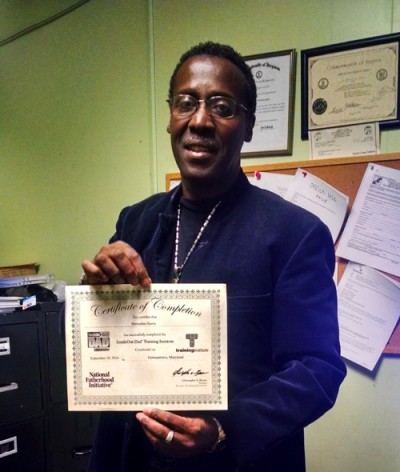
At age 54, Harris is what voting rights advocate Mike Edwards calls a ‘voice to be reckoned with.’ A straight-talking Brooklyn native, Harris spent more than a decade in prison on drug possession and distribution charges in Virginia, and recently restored his voting rights after more than four years of petitioning the state. In 2011, when he was on the cusp of getting his vote back, he founded the Hollaback and Restore Project, a ministry created to help Virginians convicted of felonies successfully navigate the challenges of reintegrating into society: finding a job, living quarters, medical coverage, and of course, regaining the right to vote.
harris-final-e1414158036708

Harris displays an “InsideOut Dad Training” certificate from the National Fatherhood Initiative.

CREDIT: ERICA HELLERSTEIN

On a cool afternoon in October, he shows me around the Hollaback’s headquarters; a former bar and nightclub dubbed Club Caribe, with cavernous, breezy rooms and walls draped in tropical paintings. He waxes philosophic about his relationship with state politicians — “we’re trying to be on the same page but we don’t come from the same book” — and wears navy snakeskin dress shoes, scuffed ever so slightly at the toe, perfectly ironed grey slacks, and a large silver cross pendant.

Harris’s battle, though situated in Virginia, underscores a national debate about the ethics of disenfranchisement – often dubbed the last gasp of Jim Crow – and their impact on election outcomes. Virginia’s case is particularly interesting. Recently, the state has been inching towards rights restoration reform: Virginia’s constitution strips felons of voting rights for life, but the Governor can take executive action to restore felons’ voting rights. Former Governor Bob McDonnell and current Governor Terry McAuliffe both made significant – and highly praised – changes to the rights restoration process. In May 2013, McDonnell granted what’s known as “automatic restoration” (but is actually only truly automatic for people currently incarcerated or on supervised probation) to people convicted of nonviolent felonies; and last April, McAuliffe reduced the mandatory waiting period for offenders with violent offenses to apply for rights restoration from five years to three years, and removed drug offenses from the violent crime categorization.

Despite the changes, Virginia (which has the 8th highest incarceration rate in the country) still has remarkably high levels of disenfranchisement, and ex-offenders report that it’s not an easy process to get back onto the voter rolls. It’s currently tied with Kentucky for the second-highest number of disenfranchised citizens in the country — at 450,000 — greater than the voting age population of Wyoming, more than 350,000 of whom have completed their prison time. Until a rights restoration constitutional amendment is passed (the General Assembly has repeatedly rejected proposals to amend the constitution, and last year the Republican-controlled House eliminated proposed funding for rights restoration work), changes to voter restoration policies will fall entirely on the shoulders of the governor. This is a shaky path to progress. Because Virginia’s constitution gives complete discretion to the governor to decide whether or not to restore rights, says Rebecca Green, a Professor of Law at the William and Mary School of Law, “you could have a governor who says nope! I’m not going to approve any applications, and that could be the process because the governor has complete discretion.”

Harris’s success story is far from the norm. As of 2010, less than three percent of Virginia felons had restored their rights throughout history – as opposed to 20 percent in Florida (which has the highest disenfranchisement rate in the country). The complete dependency on each Governor’s use of executive powers to change the rights restoration process, which has fluctuated over the years, has led to inconsistencies and confusion. Advocates cite a long list of reasons for the state’s high disenfranchisement rate: a tedious application process for people convicted of violent felonies, mandatory payment of court fees and fines that are beyond the means of many people, slow application processing, apathy and alienation among eligible voters, and general confusion about the rights restoration process due to years of shifting gubernatorial policy.

To root out these systematic problems, Harris and others have long been pushing for a constitutional amendment. “Other states have successfully overturned the law,” he remarks. “There’s no reason that once you’ve paid the price for the crime, you should be held accountable for the rest of your life.” But so far, they’ve had no luck: Any sort of effort to restore the voting rights for felons who committed violent crimes is seen as a political hot potato. After all, most politicians are not interested in advocating the exoneration of felons with violent stains on their record – and such a measure is unlikely to pass the House anytime soon.

The paradox –the gainfully employed ex-felon, paying taxes but barred from the voting process – is inconsistent with basic principles of American democracy, says S. David Mitchell, an Associate Professor of Law at the University of Missouri. “I think about those first rebels, those first criminals who were so upset about paying taxes, no taxation without representation, and yet we’re doing the exact same thing,” he says. “We have this very odd framework of saying ‘get out here and work, pay your taxes, but don’t have a voice’…We strip the fundamental right of their citizenship, the right to vote, upon conviction.”

Losing His Right To Vote

Harris has been on both sides of Virginia’s criminal justice system: as a former felon, incarcerated for years on drug charges, and as one of the state’s fiercest advocates for a system reform. His tough resolve can certainly be traced back to his childhood: He grew up far from rural Waynesboro, Virginia, flanked by rolling hills and sprawling pastoral meadows, where he now lives. He was born in 1960 in the hardscrabble neighborhood of Brownsville, Brooklyn, to a no-nonsense single mom who struggled to provide him and his siblings with the basics. “My whole life I’ve lived below the poverty line,” he nods, “but we always made do.”

His mother – a tough, hardworking type – did her best to keep Harris out of trouble. And for the most part, her efforts were successful. During the summers, Harris left the city and headed to camp in upstate New York, where he did “typical American things;” fishing, boating, and hunting. “I came back home and was different,” he says. “I knew more.” At age 17, Harris enlisted in the marines and later joined his uncle, also a marine, in Virginia where he was stationed. He was hopeful that the move would be fruitful. “I came to Virginia for a better life without knowing that I stepped right into the pot,” he says.

When he was 25 years old, his life dramatically shifted course after his brother was killed in a tragic hit-and-run car accident. Harris was left to pick up the pieces, blighted by grief and anger. Because there was no formal police investigation (authorities claimed Harris’s brother was drunk with a blood alcohol level of 2.5), Harris spiraled into a destructive cycle of depression, self-medicating himself through drugs. The police’s inaction drove him down a retaliatory road, he claims. “I said, you know what, you guys gonna pay. And that’s when I got into drugs,” – specifically, cocaine distribution in Virginia — “and I started importing people from New York, and I started taking over.”

prisonsugh

CREDIT: DYLAN PETROHILOS

In 1990, Harris was arrested for drug possession and distribution in Fairfax, Virginia. But while he was in prison, his anger started to simmer (“the vengeance that I wanted from Virginia for what they did to my brother started to die and burn out — I got tired,” he says), and his mother’s death dealt him a blow. “I never got to say goodbye to my mother because I was in prison,” he laments, “and that was a changing point.” Determined to forge a new path, he earned a GED in prison and began focusing his attention positive ways to channel his energy upon his release. “I wanted to help people like me not get stuck like I did. I wanted to help others broaden their minds and see that you can make it and you can make your own resources out of what is there. But you have to forget your past and forgive yourself.” In 2003, he was released — and has been helping his peers navigate the rights restoration process since founding Hollaback and Restore in 2011.

To Harris, regaining the right to vote meant securing his place in the American democracy after being cast aside for years. Until he regained the vote, though, Harris was part of a growing national trend: one of the millions of disenfranchised ex-felons. Throughout the country, the prison industrial complex has yielded a dramatic increase in the number of people disenfranchised: from 1.17 million in 1976 to 5.85 million in 2010. Of the nearly six million Americans disenfranchised today, 75 percent are out of prison or jail — under probation, parole supervision, or have completed their sentences. And, among these, nearly three million people are disenfranchised in states that continue to restrict voting rights even after their sentences are completed — when their debt to society, in principle, has been repaid.

A growing consciousness about the nation’s punitive justice system has ushered the issue of felon voting rights into the political conversation, but many states — including Virginia — still have a ways to go in enacting or implementing legislation that confronts the true scale of disenfranchisement in the United States. Only two states in the country (Vermont and Maine) grant full voting rights to prisoners; while 48 states including the District of Columbia prohibit voting while incarcerated for a felony offense. Most require some type of application, including payment of fines, and more than 30 states prohibit people on probation and parole from voting.

The cumulative impact of these laws is dramatic. And, it disproportionately plays out along racial lines. “The Jim Crowe is alive and well,” says Harris. “The mechanics of it are just more technical now.”

Nationally, 2.2 million — or one in every 13 — black adults is disenfranchised, and black adults are four times more likely to lose their voting rights than the rest of the adult population. If current rates of incarceration don’t let up, it’s estimated that three in ten black men will be disenfranchised at some point during their lifetimes. Virginia ranks particularly highly in this regard: One in five black adults is disenfranchised in the state, third only to Florida and Kentucky.

Those numbers, Mitchell says, “are catastrophic. If any community had that kind of disenfranchisement and lack of political power, that would be viewed as ‘oh my god, look at this oppressive government that’s silencing a large swath of this population!’ “But it doesn’t raise that because folks say, well if you’ve been convicted then you must be guilty, and thus you don’t deserve to have this right back. The racialized impact of it is quite clear.”

When A Chicken Goes Missing, A Black Man Loses His Vote

As a concept, disenfranchisement has roots in Greek, Roman, and medieval law. In many ancient societies, “civil death” was used as a punishment for violating social contract; but, viewing the laws as “antiquated,” most European countries began moving away from them in the 1820s and 1830s — precisely when they began gaining traction in the United States.

The U.S. brand of disenfranchisement began in the wake of Reconstruction, a not so subtle nod to concerns over the potential power of black men with voting rights. The law was shrouded in race-neutral language, but its undertones were bluntly acknowledged by a few mouthy lawmakers. During the Virginia Constitutional Convention of 1901-02, delegate Carter Glass declared: “This plan will eliminate the darkey as a political factor in this State in less than 5 years, so that in no single county . . . will there be the least concern felt for the complete supremacy of the white race in the affairs of government.”

In the late 18th and early 19th centuries, as states began writing their constitutions, many included prohibitions that disenfranchised citizens for very serious and particular crimes, like election offenses. While some Northeastern states, like Maine and Vermont, opted out of or limited disenfranchising provisions, many Southern states embraced — and legislated — the concept much more enthusiastically. Pippa Holloway, a Professor of History at Middle Tennessee State University, says it isn’t a coincidence that slave states “were the ones that had the most wholehearted endorsement of this idea of lifelong punishment. I argue that this is connected to slavery.”

But Virginia holds a unique place even among many of its neighbors in its unabashedly racist enforcement of the laws, says Holloway. That’s because Virginia made a strategic amendment to its constitution in 1876 (which, in 1830 established criminal disenfranchisement) that was rooted in anxiety about the empowerment of the black male voter after the civil war and their participation in the 1868 election. By enacting a constitutional amendment that expanded the reach of disenfranchisement to include “petty larceny” — or misdemeanor theft — legislators could limit the political power of black men, who were much more vulnerable of being convicted of small crimes than their white counterparts, and whose innocence was exceedingly difficult to prove. Sometimes, sharecroppers would even go so far as to round up a group black men in the run-up to an election and accuse them of stealing things, effectively stripping them of the right to vote.

“Some people even joked about it, saying things like ‘every time a chicken goes missing a black guy can’t vote anymore,” Holloway says. (She noted at that time, the phrase ‘black man’ would not have been used – but rather, a more bigoted term.)

1 in three african american men will end up behind bars

CREDIT: Dylan Petrohilos/Shutterstock

The process wasn’t just unfair, it was important: it impacted electoral outcomes. In a hotly contested 1888 election, Democrats in Richmond, Virginia, plotted a scheme to obstruct the black vote by planting Election Day “challengers” in the city’s three predominantly black precincts. In an intentionally slow process, the challengers interrogated black voters on their eligibility and credentials; the spelling of their name, place of residence, age, and criminal conviction.

The challengers had a list of around 2000 black voters with felony convictions, and each time a black voter would arrive at the front of the line to sign in, the judges would pore over the list, making sure that they weren’t among the ineligible voters – resulting in a delayed process for black voters. While the white line moved along quickly, the black line moved extremely slowly, so that by the end of the day, there were hundreds of black men who hadn’t been able to vote. “The election ended up being extremely close, about 700 votes. A subsequent Congressional investigation found that this process had helped alter the electoral outcome,” says Holloway.

What happened that day in Virginia isn’t just a relic of the past. But contemporary conversations about felon disenfranchisement laws tend to gloss over their political ramifications, which could explain why the rights restoration process has hardly moved toward reform in the modern era. Disenfranchisement laws are seen to impact a small percentage of the general population, so they’re generally viewed through a legal and philosophical prism — with arguments of fairness overriding discussions about their impact on the political system.

But research suggests that felon disenfranchisement laws actually played an influential role in a number of important elections. Sociologists Christopher Uggen and Jeffrey Manza identify seven Senate elections between 1979 and 2002 that may have been reversed if felons and ex-felons had not been disenfranchised. “Assuming that Democrats who might have been elected in the absence of felon disenfranchisement had held their seats as long as the Republicans who narrowly defeated them,” they write, “we estimate that the Democratic Party would have gained parity in 1984 and held majority control of the U.S. Senate from 1986 to the present.”

If voting rights had been extended to the approximately 827,000 disenfranchised felons in Florida in 2000, they found, Gore would have been victorious.

Not-So Automatic Rights Restoration

The rights restoration process in Virginia is undeniably unwieldy. Under the current state system, there are two different routes for rights restoration, because the state differentiates between people convicted of “more serious,” (often referred to as “violent”) crimes, and those convicted of “less serious” (“nonviolent”) crimes.

edited prison image

CREDIT: DYLAN PETROHILOS

For people convicted of “more serious” crimes, the process is arbitrary and capricious, says Edward Hailes, the General Counsel of the Advancement Project, a national civil rights organization. “It makes it hard for people to get their rights restored, too few people know about it, and it compromises their privacy.” They’re required to wait three years after their finishing their sentence in order to be eligible to apply, and they must meet a list of requirements: no misdemeanor convictions and/or pending criminal charges, DWI, or DUI in the three years preceding the application; paid all court costs, fines, penalties, and restitutions; and have no felony or misdemeanor charges pending. Finally, they must submit a lengthy application to the Secretary of the Commonwealth, which requires three letters of reference from non-family members, a personal letter to the Governor, a letter from their most recent Probation or Parole officer, a copy of their pre-Sentence report, and proof of current employment.

For people convicted of “less serious” crimes, the process is called “automatic.” But it’s only really that way for people who are currently incarcerated or on supervised probation. Their rights are automatically restored (via letter and grant order mailed to their last known address) if they fit the eligibility criteria; which include supervised probation and the payment of court fines, restitutions, and fees.

People with non-violent felony convictions who have been released and paid off their fines, restitutions, and fees, are eligible to get their rights back by submitting a mail or online restoration of rights request form to the Secretary of the Commonwealth. If the state doesn’t have a person’s name and contact information, it’s a no-go; they can’t process the person until the office is contacted, which excludes a lot of people from the process. “If you have a person convicted of a felony forty years ago, no one’s mailing him a grant order,” says Green.

Virginia doesn’t have a process for reaching out to people who might be eligible, and the current online application process, while streamlined, “doesn’t work well for people who lack easy access to computers, or aren’t sophisticated about computers. It also doesn’t work well when there’s some confusion about the conviction history or problems with proving that the person has paid their fines, fees, and restitutions.”

To put it simply: It’s complicated. And for many people, the expediency of the process hinges on a violent-nonviolent conviction dichotomy that “doesn’t make any sort of logical sense,” S. David Mitchell argues. “It all goes back to that notion of who’s deserving and who’s undeserving, and we’ve drawn an arbitrary line on the violent ex-offender with respect to the right to vote, when there’s really no relationship.” And so, it plays out destructively: Fearful of “soft on crime” branding, lawmakers tenaciously hold on to a slave-state, Jim Crow legacy of keeping marginalized groups from voting.

There are technical problems blocking efficient rights restoration, too. In the lead-up to this year’s Virginia’s October 14 voter registration deadline, advocates say that the state struggled to process many of the applications for “automatic” rights restoration submitted to the Secretary of the Commonwealth’s Rights Restoration Office.

“Please note that due to the large amount of interest, we have a backlog of received petitions,” reads a box of text on the Restoration of Rights page of the Secretary of the Commonwealth’s website.

Thus far, over 4,000 applications have been processed since January, according to Levar Stoney, Secretary of the Commonwealth, and Anne Forsythe, Assistant Director of the Rights Restoration Office. This is more than has ever been done: 8,000 applications were processed during McDonnell’s term and 4,500 during Gov. Tim Kaine’s previous term. But, judging by the website’s statements and advocate’s claims, it appears as though they have more to process. When asked about the backlog, Forsythe says: “The backlog is a bit ambiguous. We don’t really look at the number because our focus is on restoring people’s rights. We try not to count that number because we’re trying to protect the interests of Virginia citizens who have to have their rights restored, but we’re working through them as diligently as we can.”

The lag time wasn’t necessarily for lack of effort on the part of the Rights Restoration Office, says Green. “They are working their tails off. But it appears that the office is short-staffed and underfunded.” That’s largely a function of the Republican-controlled House, which didn’t provide former Governor McDonnell with the funding requested for the 2014-2016 budgetto sustain restoration work. According to HB 5002, they approved Amendment item # 62 3s, which eliminated funding from the Secretary of the Commonwealth to conduct restoration of rights work, specifically one full-time employee at $60,070 for FY 2014-2015 and 2015-2016. They also passed item 413 #3s, which eliminated $137,239 for FY 2014-2015 and $182,982 for FY 2015-2016 and three annual positions requested to address increased workload. The fate of the restoration system, at least for now, seems to rely on a House that is unwilling to acknowledge its budgetary needs.

“There was a part that the General Assembly could have played and they chose not to,” said Hope Amezquita, Staff Attorney and Legislative Counsel at the Virginia ACLU. “And that’s a travesty. That office needs a lot more money to process restoration of rights. If we’re not going to get an automatic executive order, if they’re not going to support a constitutional amendment, then at least fund the process that you have approved.”

Becoming A Full Citizen Again

For some ex-felons like Harris, voting is a top priority; but for others, there are more pressing concerns than the ballot — like finding housing and a job. Mike Edwards, who was convicted for marijuana distribution in 1979, says voting may not be number one on the list for felons dealing with the everyday challenges of reintegration. Some may have gone decades without voting; while others, who struggle with the broader culture of disenfranchisement — landing a job, insurance, and finding a place to live, to name a few — feel excluded and excommunicated from the community.

“They keep getting beat down by society,” he says. Disclosing felony history on job applications makes finding long-term, non-temp work nearly impossible (One man recalled being transferred to the dial tone of a Red Lobster phone-in application after disclosing his conviction.). George, a 44-year-old man incarcerated on breaking and entering charges, characterizes the job hunt “very discouraging. I was down to any hard labor. A lot of temp services would have me work until my 90 days were up and then I was always let go because of my conviction.”

George is one of the millions of Americans dealing with the day-to-day consequences of disenfranchisement. And as such, there are many ways to interpret the laws. There are the sheer numbers involved: over 5.5 million American citizens. There is the core ideal of U.S. constitutional democracy: no taxation without representation. There is the inarguable legacy of racism and racial disenfranchisement behind these laws. There is the interplay with a culture of alienation and distrust among many ex-felons. And, finally, there is the impact on elections from these fundamentally undemocratic laws that persist in modern America.

For Harris, it’s about the political optics: Having a say in the electoral process, plain and simple. Back in his office in sleepy Waynesboro, he’s putting the final touches on an upcoming rights restoration campaign to be rolled out before Virginia’s voter registration deadline. When asked about the progress that’s been made in recent years, he leans back in his chair and arches his brows skeptically. “It’s one step closer to something that was humane that should have been done from the beginning…This is about being part of the democracy.”

*****

Readers: I really HOPE that you read this write, because it contains some very revealing information, that if not dealt with at a gubernatorial level, can continue to have a huge negative impact on the elections. And let me remind you, the negative impact is not only for those that are disenfranchised but it will be catastrophic for the Dems because 1) we would be losing all of that voting power, and 2) it would put the repubs in very powerful positions to continue their lying, cheating, and stealing of elections to retain their power.  And 3) Do we really need to experience another republican administration? This has got to stop. 

Racial disenfranchisement is nothing new. History in this write shows us just how elections have been won, really stolen, because of incarceration and disenfranchisement of black men. Super sickening how the racist repubs will do anything they can to stay in power over OTWs. This has got to stop. 

I HOPE you’re getting my drift about the importance of Dems retaining and gaining Governor positions over the ruthless racist repubs. Vote them out. 

Thoughts? Blog me. 

Lastly, greed over a great story is surfacing from my “loyal”(?) readers. With all this back and forth about who owns what, that appears on my blog, let me reiterate that all material posted on my blog becomes the sole property of my blog. If you want to reserve any proprietary rights don’t post it to my blog. I will prominently display this caveat on my blog from now on to remind those who may have forgotten this notice.

Gratefully your blog host,

michelle

Aka BABE: We all know what this means by now :)

If you love my blog and my writes, please make a donation via PayPal, credit card, or e-check, please click the “Donate” button below. (Please only donations from those readers within the United States. – International readers please see my “Donate” page)

Or if you would like to send a check via snail mail, please make checks payable to “Michelle Moquin”, and send to:

Michelle Moquin PO Box 29235 San Francisco, Ca. 94129

Thank you for your loyal support!

All content on this site are property of Michelle Moquin © copyright 2008-2014

me

“Though she be but little, she be fierce.” – William Shakespeare Midsummer Night’s Dream 

" Politics, god, Life, News, Music, Family, Personal, Travel, Random, Photography, Religion, Aliens, Art, Entertainment, Food, Books, Thoughts, Media, Culture, Love, Sex, Poetry, Prose, Friends, Technology, Humor, Health, Writing, Events, Movies, Sports, Video, Christianity, Atheist, Blogging, History, Work, Education, Business, Fashion, Barack Obama, People, Internet, Relationships, Faith, Photos, Videos, Hillary Clinton, School, Reviews, God, TV, Philosophy, Fun, Science, Environment, Design, The Page, Rants, Pictures, Church, Blog, Nature, Marketing, Television, Democrats, Parenting, Miscellaneous, Current Events, Film, Spirituality, Obama, Musings, Home, Human Rights, Society, Comedy, Me, Random Thoughts, Research, Government, Election 2008, Baseball, Opinion, Recipes, Children, Iraq, Funny, Women, Economics, America, Misc, Commentary, John McCain, Reflections, All, Celebrities, Inspiration, Lifestyle, Theology, Linux, Kids, Games, World, India, Literature, China, Ramblings, Fitness, Money, Review, War, Articles, Economy, Journal, Quotes, NBA, Crime, Anime, Islam, 2008, Stories, Prayer, Diary, Jesus, Buddha, Muslim, Israel, Europe, Links, Marriage, Fiction, American Idol, Software, Leadership, Pop culture, Rants, Video Games, Republicans, Updates, Political, Football, Healing, Blogs, Shopping, USA, Class, Matrix, Course, Work, Web 2.0, My Life, Psychology, Gay, Happiness, Advertising, Field Hockey, Hip-hop, sex, fucking, ass, Soccer, sox"

Posted in Health & Well Being, Human Rights and Equality, Political Powwow | 10 Comments »

Just noticing: Observations Of A Blogger

Posted by Michelle Moquin on 26th October 2014

Bookmark and Share

Good morning!

A few topics to sink your teeth into, that I am just noticing. 

When you can’t get the cops to help you, ladies, take matters into your own hands. Social media might be the avenue.

#1 from the Huff Po:


Woman Tweets Photo Of Alleged Groper

Julia Marquand (Twitter)

SEATTLE (AP) — Police say a convicted sex offender is a person of interest in a groping incident involving a Seattle woman who turned to social media when she decided a police officer didn’t seem to care enough.

Police said late Wednesday on their website that the man is currently in jail for a violation of his state Corrections Department supervision.

The Seattle Times reported that Julia Marquand photographed the alleged groper with her cellphone after the incident last Sunday and filed a police report.

She says a female officer took down details but had to be persuaded to look at the cell phone photo. So Marquand posted the man’s photo on her Twitter and Facebook accounts, saying, “This dude groped me in Seattle yesterday. Cops didn’t want the pic.”

Within a few hours, Seattle police contacted Marquand and said her case had been assigned to a detective.

Police spokesman Drew Fowler said earlier that it wasn’t the tweet itself that caused police to re-evaluate Marquand’s case, but it alerted the department to a “deficiency” in the way her case was handled.

*****

#2 Need protection? If you really feel the cops aren’t on your side but they are actually against you, like we have seen in so many instances lately, this one company has come up with an idea that could further help prevent police brutality. Will it work?

Also from the Huff Po:

Company Makes Gun Tech That Could Help Prevent Police Brutality

YARDARM SMART GUN

Police may soon start using electronic guns that can track how, when and where the weapons are used, which could lead to greater accountability in investigations of police shootings.

The firearms technology company Yardarm Technologies has developed a new product that can record crucial information about when, where and how police officers use their firearms. This technology could be a welcome tool amid growing criticism of heavy-handed police tactics in the U.S., which were exemplified by the controversy around the police shooting of 18-year-old Michael Brown in Ferguson, Missouri, in August.

Yardarm’s new system can recognize and record things such as when the weapon is unholstered, when a magazine is inserted, when the first bullet enters the chamber and when and (roughly) where the weapon is fired, company spokesman Jim Schaff told The Huffington Post. Soon, Yardarm plans to give the gun the ability to know the direction and angle of each shot, Schaff said.

Why is it important to know this information? The system can provide an objective record of an incident in which a police officer used his weapon, Schaff said, which could be helpful in an investigation. He added that it “goes both ways” — the data could also be used to exonerate an officer accused of misconduct, or to prosecute a criminal in a court of law.

“We’re there to show what happened, to make an accurate reporting of the event, so that it can be used as necessary after the fact,” Schaff said.

Earlier this month, the Santa Cruz County Sheriff’s Department and the Carrollton, Texas, Police Department began equipping some of their officers’ Glocks with the new technology, Yardarm stated in a press release Friday.

“We’re looking forward to what we believe law enforcement is heading towards,” Carrollton Police Sgt. Wes Rutherford told HuffPost. “We thought we might be interested in purchasing this in the future.”

Schaff added that the technology can be also be used to keep police officers safer. When an officer draws his weapon, for example, the gun will send an alert to the police command center and to nearby officers, alerting them to a potentially dangerous situation.

Yardarm does not manufacture an actual gun, but a two-inch long device that fits into the grip of an existing gun. That device detects the gun’s every movement through high-powered motion sensors known as accelerometers.

“It’s the same kind of sensor your iPhone uses to change the screen from vertical to horizontal when you turn the phone to the side,” Schaff said. “But ours is way more powerful.”

Currently, for the sensor to work, an officer must be carrying a smartphone. That’s because the device sends a signal through the officer’s phone and then on to Yardarm’s data servers in Washington and Texas, where the information is stored for future use.

The SENSOR can also detect, to a limited extent, where each shot is fired in relation to the shots that were previously fired. “If you fire a shot and then moved laterally ten feet and fired another, we’d know that you moved,” Schaff said. “But three feet? Maybe not.”

Rutherford noted that the sensor could be helpful in an event where an officer uses his gun on a civilian. “Whenever we investigate an officer-involved shooting, we look for every particular avenue that we can, to obtain the objective information, in order to piece together the whole puzzle of what happened,” he said. “So it could absolutely help, yes.”

One of the most recent major development in police officer accountability is the use of body-worn cameras by officers in several states across the country, a practice that has received greater attention after Brown’s killing. Studies have shown that when officers wear video cameras on their uniforms, they’re significantly less likely to use force in their interactions with civilians. Civilian complaints against officers have also been shown to drop when officers wear the cameras, suggesting that this kind of technology could save cities money by reducing litigation fees.

Dashboard cameras, which became popular in the 1990s, have also proven useful for providing an objective record of problematic encounters between civilians and police: Camera footage often helps cut through the he-said-she-said chatter that inevitably accompanies allegations of police misconduct.

But there is a welter of issues with police recording themselves on the job, includingprivacy concerns and the nation’s complicated patchwork of consent laws. Another problem is that video footage isn’t always as reliable as we think. “Sometimes there can be multiple gunshots and it will sound like one, because they cover each other up,” said David Harris, a law professor at the University of Pittsburgh and a police accountability expert.

And even though dashboard cameras have been around for years, they still aren’t used in some places in the United States. Body-worn cameras, a much newer concept, are hardly used at all, though more cities are starting to consider them.

For as long as police officers have carried guns, advocates have bemoaned the lack of data and accountability regarding police shootings. To date, there is still no official data on how many people are shot by cops in the United States every year.

Gun tracking technology like Yardarm’s would add to the amount of data available to law enforcement officers and courts about controversial officer-involved shootings. Knowing where and when each shot is fired could bring greater transparency to investigations of these episodes.

In Brown’s case, the version of events recounted by Darren Wilson, the officer who shot him, has at times been at odds with accounts from witnesses. But it’s not clear that the sequence of events would be any less hazy if Wilson had been using Yardarm’s technology.

“Cameras and sensors on weapons would represent a quantum leap forward in policing and accountability,” said Kirsten John Foy, a civil rights advocate who is also the Northeast Regional Director of the Rev. Al Sharpton’s National Action Network. “But technology has its limitations as well. You can’t understand a person’s intent, a person’s mindset, or the circumstances which that officer felt made it necessary to use deadly force. It won’t record those things.”

“So I think we have to be mindful that policing is not just a science, it’s also an art form,” he added. “And there are other factors that have to be taken into account.”

This isn’t the first time Yardarm Technologies has attempted to develop a firearm to help address public safety issues. After the 2012 shooting at Sandy Hook Elementary School in Newtown, Connecticut, Yardarm set out to create a consumer “smart gun” that could be remotely disabled using an app. But the company abandoned that plan when it realized how politically controversial the idea was. Compared to the consumer market, Yardarm encountered much less resistance marketing its technologies to law enforcement, Schaff told HuffPost earlier this year.

CORRECTION: This article originally suggested that Yardarm manufactures its own firearm. Rather it makes a small sensor that fits into an existing gun.

*****

#3 This one is shocking and sickening, but no surprise considering what has been heavily in the news lately.

From Think Progress.

Report: Black Male Teens Are 21 Times More Likely To Be Killed By Cops Than White Ones

Lesley McSpadden, right, the mother of 18-year-old Michael Brown, watches as Brown's father, Michael Brown Sr., holds up a family picture of himself, his son, top left in photo, and a young child during a news conference Monday, Aug. 11, 2014, in Ferguson, Mo. Michael Brown, 18, was shot and killed in a confrontation with police in the St. Louis suburb of Ferguson, Mo, on Saturday, Aug. 9, 2014.

Lesley McSpadden, right, the mother of 18-year-old Michael Brown, watches as Brown’s father, Michael Brown Sr., holds up a family picture of himself, his son, top left in photo, and a young child during a news conference Monday, Aug. 11, 2014, in Ferguson, Mo. Michael Brown, 18, was shot and killed in a confrontation with police in the St. Louis suburb of Ferguson, Mo, on Saturday, Aug. 9, 2014.

CREDIT: AP PHOTO / JEFF ROBERSON

There’s a lot we don’t know about how many people have actually been killed at police hands in the United States, thanks to woefully inadequate transparency and federal record-keeping. But there’s one thing we do now know: Among those we do know were shot by police, black teens were 21 times more likely to be shot deadthan their white counterparts.

“The 1,217 deadly police shootings from 2010 to 2012 captured in the federal data show that blacks, age 15 to 19, were killed at a rate of 31.17 per million, while just 1.47 per million white males in that age range died at the hands of police,” a new ProPublica report explains, noting that if whites were killed at the same ratio there would have been another 185 white deaths, just during that three-year period, just of those in that narrow age range.

To arrive at this statistic, ProPublica analyzed the list of 12,000 police shooting deaths that were self-reported by agencies to the Federal Bureau of Investigation between 1980 and 2012. Because this data is self-reported and departments are not required to submit information, this data likely significantly undercounts the number of shootings. Florida departments, for example, haven’t submitted data since 1997 and New York City hasn’t submitted data since 2007. And the FBI asks only for “justifiable homicide”figures, meaning in those instances where the shootings are most overtly viewed as unjustified or the litigation is ongoing, departments are less likely to report.

Still, assessing available data may provide the best insight we have into how grave racial disparities in police violence are, particularly when it comes to young black men, who were stopped by NYPD officers in 2011 more times than the total number of young black men in New York City. Unsurprisingly, past analyses have also found disproportionate violence against blacks, including a 2007 investigation by Colorlines and the Chicago Reporter in 10 major cities. An NAACP report of Oakland, California, found that 37 of 45 police-involved shootings were of blacks, while zero were of whites. “Although weapons were not found in 40 percent of cases, the NAACP found, no officers were charged,” Mother Jones reported.

Studies of human and police behavior suggest that racial bias is baked into policing, particularly because individuals misperceive the threat posed by African Americans. Nonetheless, a 2012 poll after the George Zimmerman verdict found that that the gap between whites and blacks who think the justice system is biased was greater than ever.

*****

Readers: Notice a common thread here? Choose one to chat about or all three. Your call. Blog me.

Happy Sunday everyone! Go Giants!

Peace out. 

Lastly, greed over a great story is surfacing from my “loyal”(?) readers. With all this back and forth about who owns what, that appears on my blog, let me reiterate that all material posted on my blog becomes the sole property of my blog. If you want to reserve any proprietary rights don’t post it to my blog. I will prominently display this caveat on my blog from now on to remind those who may have forgotten this notice.

Gratefully your blog host,

michelle

Aka BABE: We all know what this means by now :)

If you love my blog and my writes, please make a donation via PayPal, credit card, or e-check, please click the “Donate” button below. (Please only donations from those readers within the United States. – International readers please see my “Donate” page)

Or if you would like to send a check via snail mail, please make checks payable to “Michelle Moquin”, and send to:

Michelle Moquin PO Box 29235 San Francisco, Ca. 94129

Thank you for your loyal support!

All content on this site are property of Michelle Moquin © copyright 2008-2014

me

“Though she be but little, she be fierce.” – William Shakespeare Midsummer Night’s Dream 

" Politics, god, Life, News, Music, Family, Personal, Travel, Random, Photography, Religion, Aliens, Art, Entertainment, Food, Books, Thoughts, Media, Culture, Love, Sex, Poetry, Prose, Friends, Technology, Humor, Health, Writing, Events, Movies, Sports, Video, Christianity, Atheist, Blogging, History, Work, Education, Business, Fashion, Barack Obama, People, Internet, Relationships, Faith, Photos, Videos, Hillary Clinton, School, Reviews, God, TV, Philosophy, Fun, Science, Environment, Design, The Page, Rants, Pictures, Church, Blog, Nature, Marketing, Television, Democrats, Parenting, Miscellaneous, Current Events, Film, Spirituality, Obama, Musings, Home, Human Rights, Society, Comedy, Me, Random Thoughts, Research, Government, Election 2008, Baseball, Opinion, Recipes, Children, Iraq, Funny, Women, Economics, America, Misc, Commentary, John McCain, Reflections, All, Celebrities, Inspiration, Lifestyle, Theology, Linux, Kids, Games, World, India, Literature, China, Ramblings, Fitness, Money, Review, War, Articles, Economy, Journal, Quotes, NBA, Crime, Anime, Islam, 2008, Stories, Prayer, Diary, Jesus, Buddha, Muslim, Israel, Europe, Links, Marriage, Fiction, American Idol, Software, Leadership, Pop culture, Rants, Video Games, Republicans, Updates, Political, Football, Healing, Blogs, Shopping, USA, Class, Matrix, Course, Work, Web 2.0, My Life, Psychology, Gay, Happiness, Advertising, Field Hockey, Hip-hop, sex, fucking, ass, Soccer, sox"

Posted in Good Reads and Good See'ds, Health & Well Being, Human Rights and Equality, Just noticing: Observations of a blogger | 23 Comments »

Conservatives Continue To Complain And Bash Minimum Wage

Posted by Michelle Moquin on 24th October 2014


Bookmark and Share

Good morning!

The Progress Report Banner

Christie Is Complaining Again

Chris Christie Joins Other Wealthy Conservatives In Bashing Minimum Wage

New Jersey Governor Chris Christie opened up yesterday about his feelings on the progressive efforts to raise the minimum wage and lift millions of hard-working Americans out of poverty: “I’m tired of hearing about the minimum wage,” he said. “I really am.”

Christie is the 4th-highest paid governor in America, earning $175,000 per year. And as the Chairman of the Republican Governors Association, these comments channel the views of a number of his colleagues or would-be colleagues: there is a growing list of other Republicans governors or candidates who oppose raising the minimum wage and sometimes even deny whether we need a minimum wage at all. Here are a few:

In Kansas, a top economic adviser to Governor Sam Brownback went even farther, calling the federal minimum wage the “black teenage unemployment act” while speaking to Fox News.

BOTTOM LINE: So, Chris Christie, you are “tired of hearing about the minimum wage”? Try living on it. Hard-working women and men are trying to raise families on the minimum wage, and it is only getting harder and harder for them to make ends meet. A federal minimum wage of $10.10 could lift nearly 5 million Americans out of poverty and boost the economy by billions of dollars.

*****

Blog Me.

Lastly, greed over a great story is surfacing from my “loyal”(?) readers. With all this back and forth about who owns what, that appears on my blog, let me reiterate that all material posted on my blog becomes the sole property of my blog. If you want to reserve any proprietary rights don’t post it to my blog. I will prominently display this caveat on my blog from now on to remind those who may have forgotten this notice.

Gratefully your blog host,

michelle

Aka BABE: We all know what this means by now :)

If you love my blog and my writes, please make a donation via PayPal, credit card, or e-check, please click the “Donate” button below. (Please only donations from those readers within the United States. – International readers please see my “Donate” page)

Or if you would like to send a check via snail mail, please make checks payable to “Michelle Moquin”, and send to:

Michelle Moquin PO Box 29235 San Francisco, Ca. 94129

Thank you for your loyal support!

All content on this site are property of Michelle Moquin © copyright 2008-2014

me

“Though she be but little, she be fierce.” – William Shakespeare Midsummer Night’s Dream 

" Politics, god, Life, News, Music, Family, Personal, Travel, Random, Photography, Religion, Aliens, Art, Entertainment, Food, Books, Thoughts, Media, Culture, Love, Sex, Poetry, Prose, Friends, Technology, Humor, Health, Writing, Events, Movies, Sports, Video, Christianity, Atheist, Blogging, History, Work, Education, Business, Fashion, Barack Obama, People, Internet, Relationships, Faith, Photos, Videos, Hillary Clinton, School, Reviews, God, TV, Philosophy, Fun, Science, Environment, Design, The Page, Rants, Pictures, Church, Blog, Nature, Marketing, Television, Democrats, Parenting, Miscellaneous, Current Events, Film, Spirituality, Obama, Musings, Home, Human Rights, Society, Comedy, Me, Random Thoughts, Research, Government, Election 2008, Baseball, Opinion, Recipes, Children, Iraq, Funny, Women, Economics, America, Misc, Commentary, John McCain, Reflections, All, Celebrities, Inspiration, Lifestyle, Theology, Linux, Kids, Games, World, India, Literature, China, Ramblings, Fitness, Money, Review, War, Articles, Economy, Journal, Quotes, NBA, Crime, Anime, Islam, 2008, Stories, Prayer, Diary, Jesus, Buddha, Muslim, Israel, Europe, Links, Marriage, Fiction, American Idol, Software, Leadership, Pop culture, Rants, Video Games, Republicans, Updates, Political, Football, Healing, Blogs, Shopping, USA, Class, Matrix, Course, Work, Web 2.0, My Life, Psychology, Gay, Happiness, Advertising, Field Hockey, Hip-hop, sex, fucking, ass, Soccer, sox"

Posted in Health & Well Being, Human Rights and Equality, Political Powwow | 37 Comments »

Money Matters

Posted by Michelle Moquin on 20th October 2014


Bookmark and Share

Good morning!


Why is it that the repugs always tout that they are fiscally responsible, yet spend, no, “waste” so much money holding the country hostage.


The Progress Report Banner

One Year Later

BY CAP ACTION WAR ROOM POSTED ON 

A Year After The Government Shutdown, Conservatives Haven’t Learned Their Lesson

Today marks the one-year anniversary of when federal offices began closing due to a Republican-forced government shutdown — that lasted 16 days — in an effort to pursue their extreme ideological agenda. A quick reminder of what the government shutdown costs America:

  • $24 Billion: What the shutdown cost the economy.
  • $2.5 Billion: What the shutdown cost taxpayers.
  • 120,000 Jobs: The number of jobs lost due to the shutdown.
  • $414 Million: The estimated lost revenue to parks and surrounding communities due to the closure of 401 national parks.

Despite the deep unpopularity of the government shutdown shenanigans among the American public, Senate Minority Leader Mitch McConnell has promised more of the same if the GOP takes control of the upper chamber in 2015.

“The typically reserved McConnell laid out his clearest thinking yet of how he would lead the Senate if Republicans gain control of the chamber. The emerging strategy: Attach riders to spending bills that would limit Obama policies on everything from the environment to health care, consider using an arcane budget tactic to circumvent Democratic filibusters and force the president to “move to the center” if he wants to get any new legislation through Congress. McConnell risks overreaching if he follows through with his pledge to attach policy riders to spending bills. If Obama refuses to accept such measures, a government shutdown could ensue. Republicans bore much of the blame for last year’s government shutdown, and their fortunes rebounded only when the administration bungled the rollout of Obamacare…But asked about the potential that his approach could spark another shutdown, McConnell said it would be up to the president to decide whether to veto spending bills that would keep the government open.

This is a stark reminder of how much is at stake this election cycle. But the implications go beyond just government shutdown threats. A Republican-controlled Senate would also mean:

  • A Senate focused on creating an economy that only works for the wealthiest and select few, instead of an economy that works for everyone.
  • A Senate focused on taking away people’s healthcare and gutting environmental safeguards that provide vital public health protections.
  • A Senate focused on obstruction of progressive appointments to the executive and judiciary, which will impact voting rights, marriage equality, health care, immigration and more.
  • A Senate focused on overblown Administration scandals instead of addressing the serious issues facing Americans.

BOTTOM LINE: One year after the shutdown, it’s clear conservatives haven’t learned their lesson. Americans want a Senate that works for them, not one that holds them hostage for political reasons.

*****

Readers: Conservatives don’t care about learning lessons, they only care about control, and will do anything they need to, to be holding the keys and back in control. Yeah, we do care about a Senate that works for us, but the repubs in control is not going to be a Senate that works for the American people, at least not the 99%. They will be the demise of this country if they control the Senate. Our only HOPE is if the Dems retain control.

Patricia, Tina: Both of your statements cannot be said enough in the next two and a half weeks. Go to the polls and vote them out.

Peace out. 

Lastly, greed over a great story is surfacing from my “loyal”(?) readers. With all this back and forth about who owns what, that appears on my blog, let me reiterate that all material posted on my blog becomes the sole property of my blog. If you want to reserve any proprietary rights don’t post it to my blog. I will prominently display this caveat on my blog from now on to remind those who may have forgotten this notice.

Gratefully your blog host,

michelle

Aka BABE: We all know what this means by now :)

If you love my blog and my writes, please make a donation via PayPal, credit card, or e-check, please click the “Donate” button below. (Please only donations from those readers within the United States. – International readers please see my “Donate” page)

Or if you would like to send a check via snail mail, please make checks payable to “Michelle Moquin”, and send to:

Michelle Moquin PO Box 29235 San Francisco, Ca. 94129

Thank you for your loyal support!

All content on this site are property of Michelle Moquin © copyright 2008-2014

me

“Though she be but little, she be fierce.” – William Shakespeare Midsummer Night’s Dream 

" Politics, god, Life, News, Music, Family, Personal, Travel, Random, Photography, Religion, Aliens, Art, Entertainment, Food, Books, Thoughts, Media, Culture, Love, Sex, Poetry, Prose, Friends, Technology, Humor, Health, Writing, Events, Movies, Sports, Video, Christianity, Atheist, Blogging, History, Work, Education, Business, Fashion, Barack Obama, People, Internet, Relationships, Faith, Photos, Videos, Hillary Clinton, School, Reviews, God, TV, Philosophy, Fun, Science, Environment, Design, The Page, Rants, Pictures, Church, Blog, Nature, Marketing, Television, Democrats, Parenting, Miscellaneous, Current Events, Film, Spirituality, Obama, Musings, Home, Human Rights, Society, Comedy, Me, Random Thoughts, Research, Government, Election 2008, Baseball, Opinion, Recipes, Children, Iraq, Funny, Women, Economics, America, Misc, Commentary, John McCain, Reflections, All, Celebrities, Inspiration, Lifestyle, Theology, Linux, Kids, Games, World, India, Literature, China, Ramblings, Fitness, Money, Review, War, Articles, Economy, Journal, Quotes, NBA, Crime, Anime, Islam, 2008, Stories, Prayer, Diary, Jesus, Buddha, Muslim, Israel, Europe, Links, Marriage, Fiction, American Idol, Software, Leadership, Pop culture, Rants, Video Games, Republicans, Updates, Political, Football, Healing, Blogs, Shopping, USA, Class, Matrix, Course, Work, Web 2.0, My Life, Psychology, Gay, Happiness, Advertising, Field Hockey, Hip-hop, sex, fucking, ass, Soccer, sox"

Posted in Health & Well Being, Political Powwow | 18 Comments »