For those of you interested in reading an Earthling Girl's Guide to a better Government, and a Greener world, check out the blog:
Contact Your Representatives and Senators Here!
To send letters to your representatives about any issue of interest, Click here
To send letters to your Senators about any issue of interest, Click here
Get involved - Write your letters today!
On The Issues
Don't be uninformed!
Click here to see how every political leader on every issue voted.
Don’t Believe The Lies – Get The Facts
FactCheck.org is a nonpartisan, nonprofit “consumer advocate” for voters that aims to reduce the level of deception and confusion in U.S. politics. They monitor the factual accuracy of what is said by major U.S. political players in the form of TV ads, debates, speeches, interviews and news releases. Their goal is to apply the best practices of both journalism and scholarship, and to increase public knowledge and understanding.
Pulitzer Prize Winner Politifact.com is another trusted site to get the facts. Click here to get the facts.
Who’s Paying Who?
On The Issues is a nonpartisan guide to money's influence on U.S. elections and public policy.
Blog Rules of Conduct
Rule #1: "The aliens can not reveal anything about anyone’s life that would not be known without the use of our technology. The exception being that if a reader has a question about his or her health and the assistance of alien technology would be necessary to answer that question.”
Rule #2: "Aliens will not threaten humans and Humans will not threaten aliens."
Rule #3:
Posting Comments:
When posting a comment in regards to any past or archived article, please reference the title and date of the article and post your comment on the present day to keep the conversation contemporary.
NOTE: You do not need to add your e-mail address when posting a comment. Your real name, an alias, a moniker, initials...whatever ...even simply "anonymous" is all you need to add in the fields in order to post a comment.
I DO NOT CENSOR COMMENTS POSTED TO THIS BLOG: Therefore this blog is not for the faint hearted, thin skinned, easily offended or the appointed people's moralist. If you feel that you may fit in any of those categories, please DO NOT read my blog or its comments. There are plenty of blogs that will fit your needs, find one. This warning also applies to those who post comments who would find it unpleasant or mentally injurious to receive an opposing opinion via a raw to vulgar delivery. I DO NOT censor comments posted here. If you post a comment, you are on notice that you may receive a comment in language or opinion that you will not approve of or that you feel is offensive. If that would bother you, DO NOT post on my blog.
27Mar2011
Medical Disclaimer:
I am not a doctor nor am I medically trained in any field. No one on this website is claiming to be a medical physician or claiming to be medically trained in any field.
However, anyone can blog information about health articles, folk remedies, possible cures, possible treatments, etc that they have heard of on my blog. Please see your physician or a health care professional before heeding or using any medical information given on this blog. It is not intended to replace any medical advice given to you by your licensed medical professional. This blog is simply providing a medium for discussion on all matters concerning life. All opinions given are the sole responsibility of the person giving them. This blog does not make any claim to their truthfulness, honesty, or factuality because of their presence on my blog.
Again, Please consult a health care professional before heeding any health information given here.
27Mar2011
Legal Disclaimer:
Michelle Moquin's "A Day In The Life Of..." publishes the opinions of expert authorities in many fields. But the use of these opinions is no substitute for legal, accounting, investment, medical and other professional services to suit your specific personal needs. Always consult a competent professional for answers to your specific questions.
27Mar2011
Fair Use Notice Disclaimer
This web site may contain copyrighted material the use of which has not always been specifically authorized by the copyright owner. We are making such material available in our efforts to advance the understanding of humanity's problems and hopefully to help find solutions for those problems.
We believe this constitutes a 'fair use' of any such copyrighted material as provided for in section 107 of the US Copyright Law. In accordance with Title 17 U.S.C. Section 107, the material on this site is distributed without profit to those who have expressed a prior interest in receiving the included information for research and educational purposes. A click on a hyperlink is a request for information.
However, if you wish to use copyrighted material from this site for purposes of your own that go beyond 'fair use', you must obtain permission from me.
You can read more about "fair use' and US Copyright Law"at the"Legal Information Institute of Cornell Law School." This notice was modified from a similar notice at "Common Dreams."
From The Rachel Maddow Show. It’s not a very good quality video but the conversation is all you need to be concerned about.
Sen. Warren draws distinction between parties for 2014 midterm elections
Senator Elizabeth Warren, Democrat from Massachusetts, talks with Rachel Maddow about the differences between Democrats and Republicans on issues like pay equity and student loans and what’s at stake in the 2014 midterm elections.
*****
Readers: Love this girl. Love what she is saying.
Rachel Maddow: Good interview. I HOPE you’re feeling better.
Dailey: Thank you. I HOPE my message has long legs and a wide reach.
Scott: I agree with /SB, only I will take it a step further and say that they do have the cure for cancer and it is locked up in some safe place where no one can find it.
Blog me.
Lastly, greed over a great story is surfacing from my “loyal”(?) readers. With all this back and forth about who owns what, that appears on my blog, let me reiterate that all material posted on my blog becomes the sole property of my blog.If you want to reserve any proprietary rights don’t post it to my blog. I will prominently display this caveat on my blog from now on to remind those who may have forgotten this notice.
Gratefully your blog host,
michelle
Aka BABE: We all know what this means by now :)
If you love my blog and my writes, please make a donation via PayPal, credit card, or e-check, please click the “Donate” button below. (Please only donations from those readers within the United States. – International readers please see my “Donate” page)
Or if you would like to send a check via snail mail, please make checks payable to “Michelle Moquin”, and send to:
Michelle Moquin PO Box 29235 San Francisco, Ca. 94129
All day Sunday I was out on the beautiful San Francisco Bay boating with good friends. It was a stellar hot day, no wind, and clear blue skies. We saw seals swimming which we expected. That was thrilling enough. But when we were blessed with wonderful glimpses of Dolphins too it was simply spectacular. And each time one of us spotted a dolphin, we would point our finger in glee and shout “Look! There’s another one!” so that all of us could enjoy the wondrous sight. A rare day on the Bay – absolutely perfect - super special and magical.
I came home that night thinking about those Dolphins and how free and beautiful they were, only to be reminded that in my queue I had a horrific write waiting to be posted. Every year Dolphins are hunted and killed in Japan, and every year I post something that speaks of the cruelty. I so look forward to the day when this cruel and barbaric practice has come to an end. But until it does, I will be posting in support of these beautiful creatures that grace our planet and are subjected to such atrocities from humans.
Tokyo (CNN) – The slaughter of dolphins has begun again in a small Japanese village, in a controversial annual hunt that pits Western environmentalist values against what locals say are traditional hunting practices.
Taiji, a coastal town of 3,500 people in the Japanese prefecture of Wakayama, has a dolphin hunting season from September to March every year.
Local fishermen are permitted by the Wakayama prefectural government to hunt an annual quota of nearly 2,000 dolphins and porpoises from seven different species, in accordance with what the government says is traditional practice.
Most of the dolphins are killed for their meat, but many are sold live to aquariums around the world.
‘Eerie’ killing cove
In recent years, the Taiji dophin hunt has become a focal point for activists, particularly since the release of the Academy Award-winning 2009 film The Cove, which documented the hunt and raised awareness of Taiji’s dolphin hunting industry internationally.
Conservationist group Sea Shepherd has had a presence in Taiji during hunt season for the past five years, broadcasting tfrom the village via a livefeed, and mobilizing a social media campaign against the hunt.
The campaign has drawn celebrity and other high-profile supporters, with comedian Ricky Gervais and U.S. ambassador to Japan Caroline Kennedy tweeting their support in recent years, and former Beverly Hills 90210 and Charmed actress Shannen Doherty visiting Taiji last week to witness the hunt.
“It’s eerie,” Doherty said in a statement. “You wonder how they (the hunters) are able to go to bed at night… I think being here rocks even the most hardened human being, because it is just atrocious.”
Melissa Sehgal, Sea Shepherd’s campaign co-ordinator for the Taiji project, which it calls “Operation Infinite Patience,” said that after 15 days without the capture or killing of dolphins, the fishermen had begun killing pods of Risso’s dolphins last week.
Four dolphin pods had been driven into the cove for killing so far this year, the group said.
“These dolphins are a gentle and docile species, but they continued to fight and struggle to stay alive,” Sehgal told CNN.
The Wakayama prefectural government declined CNN’s request for an interview, referring instead to a statement on its website outlining its position on the issue.
It said that residents viewed dolphins and whales as a legitimate marine resource, and that the hunt, a local tradition, was integral to the town’s economic survival.
“Located far away from the centers of economic activity, the town has a 400-year history as the cradle of whaling, and has flourished over the years thanks to whaling and the dolphin fishery,” the statement said.
“The dolphin fishery is still an indispensable industry for the local residents to make their living.”
‘Barbaric’ technique
Sea Shepherd is particularly opposed to the method used to herd and capture the dolphins, a technique known as “drive hunting” which Sehgal described as “barbaric.”
“Using metal banger poles to create a wall of sound to disorient and deafen the pod… forces them to swim away from the boats and into the shallows of the killing cove,” she said.
“Once netted into the cove, the dolphins are literally wrangled and tethered, often sustaining bloody wounds… The dolphin hunters use large metal rods to penetrate the spinal cord. This is hammered into the dolphins and small whales. The dolphins do not die immediately, but are left to either bleed out from internal injuries or drown in their own blood.”
The Taiji fishermen’s union has previously told CNN that the spine-severing technique had been introduced as a more humane method of killing the dolphins.
Sea Shepherd’s operations in Taiji involve live-streaming activity in the village, including following suspected fishermen they believe to be transporting dolphin meat. A recent live-stream showed men retreating into garages when the Sea Shepherd crew approached.
This activism from foreign conservationists is interpreted by some locals as harassment.
“The Taiji dolphin fishery has been a target of repeated psychological harassment and interference by aggressive foreign animal protection organizations,” reads the Wakayama government’s statement.
“Taiji dolphin fishermen are just conducting a legal fishing activity in their traditional way in full accordance with regulations and rules under the supervision of both the national and the prefectural governments. . . Such criticisms are an unfair threat to the fishermen’s rights to make a living and offend the history and pride of the town.”
The statement also likens the killing of the dolphins to the killing of cows and pigs for food, implying hypocrisy on the part of activists for their criticism of the dolphin hunt.
“Not only dolphins but also other animals including livestock such as cows and pigs display emotion and intelligence,” it read. “We, however, cannot help killing livestock to eat their meat. Do people criticize these activities as barbaric?”
‘Terrorized’ dolphins
But activists say any comparison between the killing of wild dolphins and domesticated livestock is spurious.
“They’re terrorized for hours on end,” says Ric O’Barry, a former dolphin trainer who trained the animals used in the popular U.S. show Flipper, before undergoing a sea-change in his views about holding dolphins in captivity.
He has campaigned against the live dolphin trade with his organization The Dolphin Project, and also featured in The Cove.
“They’re self-aware like humans and the great apes. They look in the mirror and they know what they’re looking at. They’re not domesticated animals,” he told CNN.
Besides, he said, while many of the dolphins were killed and sold for meat, the most attractive specimens were rounded up during the drive hunting were taken alive and sold to aquariums for sums in excess of $100,000 an animal. These captures were the real “economic underpinning” of the annual hunt, he said.
“You’d get $400-500 for a dead dolphin’s meat, but there’s a lot of money for a live one, and that’s what keeps this thing going,” he said.
Sehgal said that local dolphin trainers who “claim to love dolphins” were often seen assisting hunters in wrangling the animals to shore.
“Only the young, beautiful and more suitable are selected. These dolphins are then forced to witness their families brutally slaughtered in front of them,” she said.
According to Sea Shepherd estimates, 850 dolphins were killed and 160 taken into captivity last season, 920 killed and 249 caught the previous season, and 820 killed and 54 caught the season before that.
Conservationists argue that it is this lucrative trade in captive dolphins that is the real motivation for the hunting season, a practice they say has only existed since the late 1960s.
“The argument that it is (an older) tradition is simply untrue,” said Lisa Agabian, Sea Shepherd’s director of media relations.
“Even if it were, I can say with absolute certainty that at no time would ancient fisherman have gone out with motorized fishing vessels and skiffs and modern technology to aid them in their capture of dolphins. The way they are hunting now, the dolphins don’t have a fighting chance. That is certainly not traditional culture at work.”
Said Sehgal: “This is blood money . . . (there’s) nothing cultural about kidnapping wild dolphins for profit.”
But Japanese defenders of the hunt maintain that the hunting of dolphins and whales has been a traditional industry and economic lifeline since the 17th century.
An official at the Taiji town office told CNN it was natural that hunting techniques had evolved with new technologies.
Staff at Japan’s Ministry of Agriculture, Forestry and Fisheries and Institute of Cetacean Research said they were not available for comment.
*****
Readers: This is tragic..truly horrific…my heart is heavy. I wish I knew what to do to stop it but I have no answers. Do you? Blog me.
Peace & love…
Lastly, greed over a great story is surfacing from my “loyal”(?) readers. With all this back and forth about who owns what, that appears on my blog, let me reiterate that all material posted on my blog becomes the sole property of my blog.If you want to reserve any proprietary rights don’t post it to my blog. I will prominently display this caveat on my blog from now on to remind those who may have forgotten this notice.
Gratefully your blog host,
michelle
Aka BABE: We all know what this means by now :)
If you love my blog and my writes, please make a donation via PayPal, credit card, or e-check, please click the “Donate” button below. (Please only donations from those readers within the United States. – International readers please see my “Donate” page)
Or if you would like to send a check via snail mail, please make checks payable to “Michelle Moquin”, and send to:
Michelle Moquin PO Box 29235 San Francisco, Ca. 94129
Naomi, Patricia, Janet: I saw 60 minutes too last night. I was so disgusted by these companies making so much money by taking advantage of people and their emotions…people that are dying from cancer and desperate to live.
Great suggestion to post this writeJanet. Thank you. Here is the segment and the script from 60-minutes:
Lesley Stahl discovers the shock and anxiety of a cancer diagnosis can be followed by a second jolt: the astronomical price of cancer drugs
The following is a script of “The Cost of Cancer Drugs” which aired on Oct. 5, 2014. Lesley Stahl is the correspondent. Richard Bonin, producer.
Cancer is so pervasive that it touches virtually every family in this country. More than one out of three Americans will be diagnosed with some form of it in their lifetime. And as anyone who’s been through it knows, the shock and anxiety of the diagnosis is followed by a second jolt: the high price of cancer drugs.
They are so astronomical that a growing number of patients can’t afford their co-pay, the percentage of their drug bill they have to pay out-of-pocket. This has led to a revolt against the drug companies led by some of the most prominent cancer doctors in the country.
Dr. Leonard Saltz: We’re in a situation where a cancer diagnosis is one of the leading causes of personal bankruptcy.
Dr. Leonard Saltz is chief of gastrointestinal oncology at Memorial Sloan Kettering, one of the nation’s premier cancer centers, and he’s a leading expert on colon cancer.
Lesley Stahl: So, are you saying, in effect, that we have to start treating the cost of these drugs almost like a side effect from cancer?
Dr. Leonard Saltz: I think that’s a fair way of looking at it. We’re starting to see the term “financial toxicity” being used in the literature. Individual patients are going into bankruptcy trying to deal with these prices.
“I do worry that people’s fear and anxiety’s are being taken advantage of.”
Lesley Stahl: The general price for a new drug is what?
Dr. Leonard Saltz: They’re priced at well over $100,000 a year.
Lesley Stahl: Wow.
Dr. Leonard Saltz: And remember that many of these drugs, most of them, don’t replace everything else. They get added to it. And if you figure one drug costs $120,000 and the next drug’s not going to cost less, you’re at a quarter-million dollars in drug costs just to get started.
Lesley Stahl: I mean, you’re dealing with people who are desperate.
Dr. Leonard Saltz: I do worry that people’s fear and anxiety’s are being taken advantage of. And yes, it costs money to develop these drugs, but I do think the price is too high.
The drug companies say it costs over a billion dollars to bring a new drug to market, so the prices reflect the cost of innovation.
The companies do provide financial assistance to some patients, but most people aren’t eligible. So many in the middle class struggle to meet the cost of their co-payments. Sometimes they take half-doses of the drug to save money. Or delay getting their prescriptions refilled.
Dr. Saltz’s battle against the cost of cancer drugs started in 2012 when the FDA approved Zaltrap for treating advanced colon cancer. Saltz compared the clinical trial results of Zaltrap to those of another drug already on the market, Avastin. He says both target the same patient population, work essentially in the same way. And, when given as part of chemotherapy, deliver the identical result: extending median survival by 1.4 months, or 42 days.
Dr. Leonard Saltz: They looked to be about the same. To me, it looked like a Coke and Pepsi sort of thing.
Then Saltz, as head of the hospital’s pharmacy committee, discovered how much it would cost: roughly $11,000 per month, more than twice that of Avastin.
60 MINUTES OVERTIME
THE “EYE POPPING” COST OF CANCER DRUGS
Lesley Stahl: So $5,000 versus $11,000. That’s quite a jump. Did it have fewer side effects? Was it less toxic? Did it have…
Dr. Leonard Saltz: No…
Lesley Stahl: …something that would have explained this double price?
Dr. Leonard Saltz: If anything, it looked like there might be a little more toxicity in the Zaltrap study.
He contacted Dr. Peter Bach, Sloan Kettering’s in-house expert on cancer drug prices.
Lesley Stahl: So Zaltrap. One day your phone rings and it’s Dr. Saltz. Do you remember what he said?
Dr. Peter Bach: He said, “Peter, I think we’re not going to include a new cancer drug because it costs too much.”
Lesley Stahl: Had you ever heard a line like that before?
Dr. Peter Bach: No. My response was, “I’ll be right down.”
Lesley Stahl: You ran down.
Dr. Peter Bach: I think I took the elevator. But yes, exactly.
Bach determined that since patients would have to take Zaltrap for several months, the price tag for 42 days of extra life would run to nearly $60,000. What they then decided to do was unprecedented: reject a drug just because of its price.
Dr. Peter Bach: We did it for one reason. Because we need to take into account the financial consequences of the decisions that we make for our patients. Patients in Medicare would pay more than $2,000 a month, themselves, out-of-pocket, for Zaltrap. And that that was the same as the typical income every month for a patient in Medicare.
Lesley Stahl: The co-pay.
Dr. Peter Bach: Right. 20 percent. Taking money from their children’s inheritance, from the money they’ve saved. We couldn’t in good conscience say, “We’re going to prescribe this more expensive drug.”
“It was a shocking event. Because it was irrefutable evidence that the price was a fiction.”
And then they trumpeted their decision in the New York Times. Blasting what they called “runaway cancer drug prices,” it was a shot across the bow of the pharmaceutical industry and Congress for passing laws that Bach says allow the drug companies to charge whatever they want for cancer medications.
Dr. Peter Bach: Medicare has to pay exactly what the drug company charges. Whatever that number is.
Lesley Stahl: Wait a minute, this is a law?
Dr. Peter Bach: Yes.
Lesley Stahl: And there’s no negotiating whatsoever with Medicare?
Dr. Peter Bach: No.
Another reason drug prices are so expensive is that according to an independent study, the single biggest source of income for private practice oncologists is the commission they make from cancer drugs. They’re the ones who buy them wholesale from the pharmaceutical companies, and sell them retail to their patients. The mark-up for Medicare patients is guaranteed by law: the average in the case of Zaltrap was 6 percent.
Dr. Leonard Saltz: What that does is create a very substantial incentive to use a more expensive drug, because if you’re getting 6 percent of $10, that’s nothing. If you’re getting 6 percent of $10,000 that starts to add up. So now you have a real conflict of interest.
But it all starts with the drug companies setting the price.
Dr. Peter Bach: We have a pricing system for drugs which is completely dictated by the people who are making the drugs.
Lesley Stahl: How do you think they’re deciding the price?
Dr. Peter Bach: It’s corporate chutzpah.
Lesley Stahl: We’ll just raise the price, period.
Dr. Peter Bach: Just a question of how brave they are and how little they want to end up in the New York Times or on 60 Minutes.
That’s because media exposure, he says, works! Right after their editorial was published, the drug’s manufacturer, Sanofi, cut the price of Zaltrap by more than half.
Dr. Peter Bach: It was a shocking event. Because it was irrefutable evidence that the price was a fiction. All of those arguments that we’ve heard for decades, “We have to charge the price we charge. We have to recoup our money. We’re good for society. Trust us. We’ll set the right price.” One op-ed in the New York Times from one hospital and they said, “Oh, okay, we’ll charge a different price.” It was like we were in a Turkish bazaar and…
Lesley Stahl: What do you mean?
Dr. Peter Bach: They said, “This carpet is $500″ and you say, “I’ll give you $100.” And the guy says, “Okay.” They set it up to make it highly profitable for doctors to go for Zaltrap instead of Avastin. It was crazy!
But he says it got even crazier when Sanofi explained the way they were changing the price.
Dr. Peter Bach: They lowered it in a way that doctors could get the drug for less. But patients were still paying as if it was high-priced.
Lesley Stahl: Oh, come on.
Dr. Peter Bach: They said to the doctor, “Buy Zaltrap from us for $11,000 and we’ll send you a check for $6,000.” Then you give it to your patient and you get to bill the patient’s insurance company as if it cost $11,000. So it made it extremely profitable for the doctors. They could basically double their money if they use Zaltrap.
“High cancer drug prices are harming patients because either you come up with the money, or you die.”
All this is accepted industry practice. After about six months, once Medicare and private insurers became aware of the doctor’s discount, the price was cut in half for everyone.
John Castellani: The drug companies have to put a price on a medicine that reflects the cost of developing them, which is very expensive and takes a long period of time, and the value that it can provide.
John Castellani is president and CEO of PhRMA, the drug industry’s trade and lobbying group in Washington.
Lesley Stahl: If you are taking a drug that’s no better than another drug already on the market and charging twice as much, and everybody thought the original drug was too much…
John Castellani: We don’t set the prices on what the patient pays. What a patient pays is determined by his or her insurance.
Lesley Stahl: Are you saying that the pharmaceutical company’s not to blame for how much the patient is paying? You’re saying it’s the insurance company?
John Castellani: I’m saying the insurance model makes the medicine seem artificially expensive for the patient.
He’s talking about the high co-pay for cancer drugs. If you’re on Medicare, you pay 20 percent.
Lesley Stahl: Twenty percent of $11,000 a month is a heck of a lot more than 20 percent of $5,000 a month.
John Castellani: But why should it be 20 percent instead of five percent?
Lesley Stahl: Why should it be $11,000 a month?
John Castellani: Because the cost of developing these therapies is so expensive.
Lesley Stahl: Then why did Sanofi cut it in half when they got some bad publicity?
John Castellani: I can’t respond to a specific company.
Sanofi declined our request for an interview, but said in this email that they lowered the price of Zaltrap after listening “to early feedback from the oncology community and … To ensure affordable choices for patients…”
Dr. Hagop Kantarjian: High cancer drug prices are harming patients because either you come up with the money, or you die.
Hagop Kantarjian chairs the department of leukemia at MD Anderson in Houston. Inspired by the doctors at Sloan Kettering, he enlisted 119 of the world’s leading leukemia specialists to co-sign this article about the high price of drugs that don’t just add a few weeks of life, but actually add years, like Gleevec.
It treats CML, one of the most common types of blood cancer that used to be a death sentence, but with Gleevec most patients survive for 10 years or more.
60 MINUTES: SEGMENT EXTRAS
NAT’L ONCOLOGISTS GROUP TACKLES SPIRALING DRUG COSTS
Dr. Hagop Kantarjian: This is probably the best drug we ever developed in cancer.
Lesley Stahl: In all cancers?
Dr. Hagop Kantarjian: So far. And that shows the dilemma, because here you have a drug that makes people live their normal life. But in order to live normally, they are enslaved by the cost of the drug. They have to pay every year.
Lesley Stahl: You have to stay on it. You have to keep taking it.
Dr. Hagop Kantarjian: You have to stay on it indefinitely.
Gleevec is the top selling drug for industry giant Novartis, bringing in more than $4 billion a year in sales. $35 billion since the drug came to market. There are now several other drugs like it. So, you’d think with the competition, the price of Gleevec would have come down.
Dr. Hagop Kantarjian: And yet, the price of the drug tripled from $28,000 a year in 2001 to $92,000 a year in 2012.
“They are making prices unreasonable, unsustainable and, in my opinion, immoral.”
Lesley Stahl: Are you saying that the drug companies are raising the prices on their older drugs.
Dr. Hagop Kantarjian: That’s correct.
Lesley Stahl: Not just the new ones. So, you have a new drug that might come out at a $100,000, but they are also saying the old drugs have to come up to that price, too?
Dr. Hagop Kantarjian: Exactly. They are making prices unreasonable, unsustainable and, in my opinion, immoral.
When we asked Novartis why they tripled the price of Gleevec, they told us, “Gleevec has been a life-changing medicine … When setting the prices of our medicines we consider … the benefits they bring to patients … The price of existing treatments and the investments needed to continue to innovate…”
[Dr. Hagop Kantarjian: This is quite an expensive medication.]
Dr. Kantarjian says one thing that has to change is the law that prevents Medicare from negotiating for lower prices.
Dr. Hagop Kantarjian: This is unique to the United States. If you look anywhere in the world, there are negotiations. Either by the government or by different regulatory bodies to regulate the price of the drug. And this is why the prices are 50 percent to 80 percent lower anywhere in the world compared to the United States.
Lesley Stahl: 50 percent to 80 percent?
Dr. Hagop Kantarjian: 50 percent to 80 percent.
Lesley Stahl: The same drug?
Dr. Hagop Kantarjian: Same drug. American patients end up paying two to three times more for the same drug compared to Canadians or Europeans or Australians and others.
Lesley Stahl: Now, Novartis, which makes Gleevec, says that the price is fair because this is a miracle drug. It really works.
Dr. Hagop Kantarjian: The only drug that works is a drug that a patient can afford.
The challenge, Dr. Saltz at Sloan Kettering says, is knowing where to draw the line between how long a drug extends life and how much it costs.
Lesley Stahl: Where is that line?
Dr. Leonard Saltz: I don’t know where that line is, but we as a society have been unwilling to discuss this topic and, as a result, the only people that are setting the line are the people that are selling the drugs.
*****
Robert I: Nice to see a comment from you. Thanks for continuing the cancer conversation by adding in some really important information that people need to know. I am familiar with the cholesterol levels being lowered every year. I have been trying to find a good write about that to post. It’s crazy and sickening how big pharma is in bed with the doctors, the ones who are supposed to care about our health, and they are basically making money by taking advantage of people wanting to live.
Readers: Between thugs with guns and greedy doctors, we can’t seem to rely on people whose jobs are supposed to be caring for our well-being. But what we can rely on is our own voice and our vote. What I wish for everyone to know is that their vote does count. We see it time and time again, how when we don’t exercise our right to vote, at best, we give our power to those that don’t have our best interest in mind, and at worst, they simply don’t care because money is more important. In case you’re wondering whom I am speaking of, it is the repub party.
Why would anyone let someone else control their livelihood, well-being, body…whatever? I certainly am not handing over that power. I encourage you to do the same and make sure that your friends and family are on board too. I can’t stress it enough and if you’re tired of me saying it…well, too bad – let’s do it so I don’t have to say it anymore. Make your voice heard. Make your vote count. Take your power back. VOTE THIS NOVEMBER.
Lucy, ST, Evelyn: I found that segment fascinating as well. And I loved that part about the dog’s eyes too. I have always connected with Lucy through her eyes and I just can’t seem to give her enough kisses throughout the day. But learning that “When dogs are looking at you they are essentially hugging you with their eyes,” really left me with such a sweet, warm feeling. I am now looking at Lucy a little differently.
I love this photo of Lucy with her “Chewy Vuitton” shoe given to her by my sister-in-law. :)
♥♥♥
Peace & Love…
Lastly, greed over a great story is surfacing from my “loyal”(?) readers. With all this back and forth about who owns what, that appears on my blog, let me reiterate that all material posted on my blog becomes the sole property of my blog.If you want to reserve any proprietary rights don’t post it to my blog. I will prominently display this caveat on my blog from now on to remind those who may have forgotten this notice.
Gratefully your blog host,
michelle
Aka BABE: We all know what this means by now :)
If you love my blog and my writes, please make a donation via PayPal, credit card, or e-check, please click the “Donate” button below. (Please only donations from those readers within the United States. – International readers please see my “Donate” page)
Or if you would like to send a check via snail mail, please make checks payable to “Michelle Moquin”, and send to:
Michelle Moquin PO Box 29235 San Francisco, Ca. 94129
Breast cancer is serious stuff but we don’t have to be so serious to honor Breast Cancer Awareness Month. Hey, even theWhite House has been known to illuminate the cause.
The North Portico exterior of the White House is illuminated pink in honor of Breast Cancer Awareness Month, Oct. 1, 2012 (Official White House Photo by Sonya N. Hebert)
October marks Breast Cancer Awareness Month, and some individuals and organizations are going beyond pink ribbons to embrace out-of-the-box ways to stand up for breast health.
We’ve partnered with the makers of Genius 3D mammography to highlight six awesome ways people are doing their part to keep breast cancer a part of the conversation.
1. Check Your Puppies!
Arguably the best thing on the internet, these pups are bringing attention to breast cancer prevention, thanks to the UK edition of Cosmopolitan and London-based self-examination advocate organization CoppaFeel!. It might seem silly, but their heads (er…hands?) are in the right place: Each month, Cosmo’s Facebook and Twitter followers are reminded to conduct their monthly breast exam with a photo of cute puppies in a bra. Cute animals AND breast health? We’re into it.
This a cappella take on The Divinyls’ 1990 classic anthem “I Touch Myself” will give you chills. After realizing her diagnosis was terminal, frontwoman Chrissy Amphlett thought this girl-power classic should be repurposed to encourage women to check their bodies for cancer. After her death in April 2013, Australian advocacy group Cancer Council New South Wales collaborated with a local group of singers to recreate this song as a means for self-examination advocacy.
3. Standup (Literally) for Awareness
We were already big fans of comedian Tig Notaro, but the way she announced her breast cancer diagnosis threw her into uncharted onstage territory. The set, which is now available on iTunes, got rave reviews for bringing a touch of humor to a very unfunny topic. From Entertainment Weekly: “…Funny, sensitive, and with a firm grasp on the fundamental absurdity of life.” Not many people can turn tragedy into touching standup, but Tig Notaro definitely succeeded.
4. Turning Lemons into (Actual) Lemonade
What’s the only thing more refreshing than a tall glass of chilled sweetness? One served with a side of compassion. Two Texas girls took their end-of-summer lemonade stand to philanthropic heights when they used the classic kid entrepreneur model to raise funds for a local organization dedicated to helping breast cancer patients. The girls put a creative touch on the summer classic — offering customers the choice of pink lemonade (and cupcakes) to help raise awareness for the cause. How sweet is that?!
5. Stiletto Stampede
Race for the Cure events will happen in 150 cities around the world this year alone. But organizers in Austin, Texas, really kick it up a notch with “Stiletto Stampede,”their take on the annual fund-race. Now in its sixth year, participants make the 100-yard dash in high heels to help women and men better understand breast cancer and breast health.
6. Cookies for the Cause
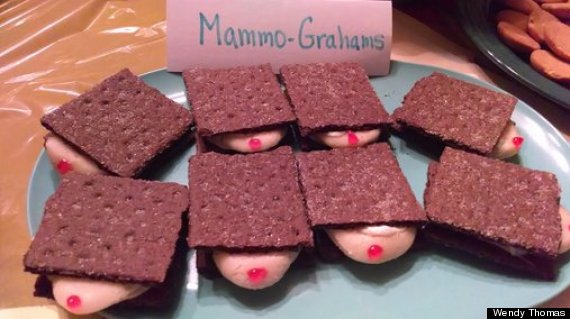
We love these “mammo-graham” cookies from blogger Wendy Thomas. Here’s the recipe so you can make your own and spread awareness among your family and friends (or even the office!)
Mammo-Graham Marzipan Recipe
What you’ll need:
chocolate graham crackers split in two
1 roll of marzipan
white frosting
pink frosting gel
To make the ones pictured above, Wendy used one roll of the marzipan cut into 13 pieces and warmed in the microwave for about 10 seconds. Then she says to “roll each section into a ball, and squish while molding it until you have a flat section for between the graham crackers and a bulging section that sticks out. ‘Glue’ the marzipan to the graham crackers with some frosting and then use the gel frosting to make the nipple.”
Genius 3D mammography is available as Hologic Selenia® Dimensions® 3D system. Please consult your physician for a complete list of the benefits and risks associated with mammography.
♥♥♥
Readers: Of course, I love anything with animals and kids…and the song…well it speaks for itself. Tig Notaro interview is a fresh and wonderful mix of raw vulnerability, authenticity, and comedy – a good watch. And those Mammo Grahams are hilarious! Yes, guys, they do get smashed like that in the mammogram x-ray machine.
Are you doing anything special this month to honor our sisters that have been diagnosed with breast cancer or who are breast cancer survivors? Please share. Blog me.
FF: Thanks for taking a step forward to stop the insanity of these thugs with badges. I tried your link to write a letter myself and it isn’t working.
If anyone would like to contact Ohio Governor Kasich’s inbox, click here.
Burne: I can totally relate about voters voting on single issues that affect them, especially when it comes to the repubs that I know. I don’t know the stats of older voters vs young voters though. I have some repub friends and I feel that they are just focusing on one or two issues and using talking points given to them. Usually it is about taxes. Ugh…So frustrating.
In my opinion and experience from the ones I do engage in a political conversation with, they’re really not on top of any other issues except the one or two that is personally affecting them. And if I have to be totally honest, I don’t even think they are totally informed, even on those. Most of my frustration is with women who have no idea because they live with their head in the sand living in a tiny world, too dumb, or just go into denial that their party is mostly misogynists who could care less about them.
But I hear what you’re saying, Marilyn. Young voters are just not voting, and especially when it comes to midterm elections. That is where we can make a huge difference, and win this election, if we can just get the young dems to the polls, especially the women. I will be blogging on this topic soon.
Sandra: It may be foolish to think that it’s going to change but it is worth the effort to get them there because the downside is, nothing will get done in the next two years unless we do. Obama got a lot of young and first time voters to the polls in 2008. Unfortunately they slacked when it came to taking it home at the midterms in 2010, but I have faith.
Lucy, ST: Sorry to hear that. You too, Irene, and anyone else having trouble. It’s the same same ol’ story. Blame it on those that oppose.
Gary: I like your suggestions of being prepared for voting day. Repubs may not be able to make it impossible to vote but they sure will try. And if you do vote, they will certainly try and switch your vote to steal the election. We have to all participate this November.
I agree with you - Obama doesn’t have to be on the ballot to make an election important. But people need to realize that midterms are sometime even more important because control can change party very quickly. We saw it in 2010 when the Dems didn’t show up because they were still high from the win in 2008. I am HOPEing that from what we have experienced with a loss in the House, how important the November midterms are are, and get themselves to the polls. Obama just signs legislation; he doesn’t write it. As we all know from experience, with Obama as president and repubs in power, hardly anything will get done, because the repubs would rather see this country fail than a black man succeed.
I feel your frustration over the apathy of the general public. I am frustrated too. We have the right to vote and many don’t exercise that right by using the power of their voice and their vote to make a difference in their own lives and the lives of others.
I just keep thinking how much Obama has done and how much more he could’ve done, and could do if we can just keep the Senate and get back the House. We have all put in so much effort over the years, we can’t give up now.
Robert, I: I haven’t seen you here in awhile. Are you around? I HOPE all is OK.
Thanks for sticking around. Peace& Love…
Lastly, greed over a great story is surfacing from my “loyal”(?) readers. With all this back and forth about who owns what, that appears on my blog, let me reiterate that all material posted on my blog becomes the sole property of my blog.If you want to reserve any proprietary rights don’t post it to my blog. I will prominently display this caveat on my blog from now on to remind those who may have forgotten this notice.
Gratefully your blog host,
michelle
Aka BABE: We all know what this means by now :)
If you love my blog and my writes, please make a donation via PayPal, credit card, or e-check, please click the “Donate” button below. (Please only donations from those readers within the United States. – International readers please see my “Donate” page)
Or if you would like to send a check via snail mail, please make checks payable to “Michelle Moquin”, and send to:
Michelle Moquin PO Box 29235 San Francisco, Ca. 94129
It seems that every time I listen to the news another young black man is getting killed by white police. And each story is more shocking than the next. I currently have 3 in my queue.
Following the hearing Davis’s parents, Ron Davis and Lucy McBath told reporters that the verdict was not just their family’s victory alone.
“We are very grateful that justice has been served, justice not only for Jordan, but justice for Trayvon and justice all the nameless, faceless children and people that will never have a voice,” Lucy McBath, Jordan’s mother said after the verdict. “And Ron and I are committed to giving our lives to walking out Jordan’s justice and Jordan’s legacy.”
Justice was served but will the killings stop? Considering this case happened 2 years ago and more killings have taken place, I am always HOPEing, but to date, I’m not convinced.
Here’s the first of three from the Huff Po. The video is disturbing.
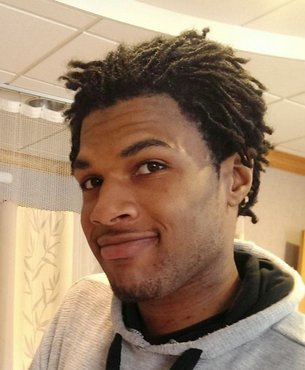
Surveillance video at an Ohio Walmart shows the moment police fired upon and killed a man who was carrying an air rifle sold at the store.
The recently released video appears to show 22-year-old John Crawford III being fired upon just seconds after police encounter him.
The August 5 incident triggered protests from residents and family members demanding the video be released. Crawford is black, and the two officers involved in the fatal shooting are white. Crawford’s family asked for a federal investigation to see if race was a factor.
Police have said multiple times that Crawford refused commands to drop the air rifle, according to the Dayton Daily News. The surveillance video, obtained by the Xenia Daily Gazette, appears to show Crawford shot almost immediately after police encounter him.
Special Prosecutor Mark Piepmeier told the Associated Press that Crawford picked up the air rifle, which had been taken out of a box and left on a shelf in the store, and walked around while on his cell phone when officers approached and shot him.
The Crawford family said they were “disgusted” by the grand jury decision to not file charges against the two officers involved in the shooting.
“The Walmart surveillance video and eyewitnesses prove that the killing of John H. Crawford, lll was not justified and was not reasonable. It is undisputed that John Crawford, lll was in Walmart as a customer and was not posing a threat to anyone in the store, especially the police officers.”
Hours after the grand jury decision, the Department of Justice released a statement saying they were going to conduct an independent investigation into the shooting, according to WCPO.
CORRECTION: A previous headline stated that officers fired on John Crawford after he set his air rifle on the ground. A newly released surveillance tape with audio shows that officers appear to fire seconds after encountering Crawford but not after the perceived weapon is on the ground.
*****
Readers: I have no doubt that race was a factor. What do you have to say? Blog me.
Peace out.
Lastly, greed over a great story is surfacing from my “loyal”(?) readers. With all this back and forth about who owns what, that appears on my blog, let me reiterate that all material posted on my blog becomes the sole property of my blog.If you want to reserve any proprietary rights don’t post it to my blog. I will prominently display this caveat on my blog from now on to remind those who may have forgotten this notice.
Gratefully your blog host,
michelle
Aka BABE: We all know what this means by now :)
If you love my blog and my writes, please make a donation via PayPal, credit card, or e-check, please click the “Donate” button below. (Please only donations from those readers within the United States. – International readers please see my “Donate” page)
Or if you would like to send a check via snail mail, please make checks payable to “Michelle Moquin”, and send to:
Michelle Moquin PO Box 29235 San Francisco, Ca. 94129